
Hardwood Floor Water Damage in Greenville: Cupping, Buckling, and What Can Be Saved
Hardwood Floor Water Damage in Greenville: Cupping, Buckling, and What Can Be Saved
Hardwood floor water damage in Greenville is one of the most stressful kinds of home damage, because the floor is the first thing you see in every room. Wood swells when it absorbs water, and it shows that swelling as cupping, crowning, buckling, or staining. The good news is that not every wet hardwood floor is ruined. With the right first steps and proper drying, many cupped floors flatten again, and only the worst cases need boards replaced. This guide explains how to read the damage, what to do first, how professional drying works, and when replacement is the honest answer.
How Water Changes a Hardwood Floor
Hardwood is a natural material, and it drinks water. When the surface and edges of a board absorb moisture, the board swells. Because boards are locked together and nailed down, that swelling has nowhere to go, so the board changes shape. The most common shape change is cupping: the edges of each board rise higher than the centre, giving the floor a washboard feel underfoot.
Crowning is the opposite pattern, where the centre of the board rises above the edges. Crowning usually appears after a floor was sanded while it was still wet, which is why sanding too early is one of the most expensive mistakes in floor recovery. Buckling is the most severe change: boards lift off the subfloor entirely, sometimes pulling free of their fasteners. Dark staining happens when water sits long enough to discolour the wood itself, and gaps appear later as boards shrink back during drying.
Cupping, Crowning, and Buckling: Reading the Damage
Cupping tells you the floor got wet and is still holding moisture, usually from below or from a spill that soaked in. Cupped floors are the most hopeful case: once the moisture source is fixed and the floor is dried properly, cupped boards often flatten back on their own, and a light sanding and refinishing can restore the surface.
Buckling tells a different story. A buckled board has swollen so much that it has broken free, which usually means the water exposure was heavy or long, or the subfloor underneath is also soaked. Buckled boards rarely settle back into place, and the honest fix is usually removing the affected boards, drying the subfloor, and installing replacements. Staining sits in between: surface stains in the finish often sand out, while deep dark stains that run through the board usually do not.
What to Do First When Hardwood Gets Wet
Stop the water source first, whether that is an appliance valve, a plumbing shutoff, or the main valve. Then remove rugs, furniture, and anything sitting on the wet floor, and soak up standing water gently with towels or a wet vacuum. Avoid dragging heavy furniture across a wet floor, because softened boards dent and scratch easily.
Two things you should not do matter as much as what you do. Do not sand a wet floor, and do not refinish it until moisture readings show the wood is dry. Sanding wet wood flattens the raised edges while they are swollen, and when the boards dry and shrink, the centres end up high, leaving you with crowning that is harder to fix than the original cupping. And do not assume the floor is dry because the surface feels dry: hardwood dries from the surface inward, and the underside and subfloor can stay wet long after the top feels fine.
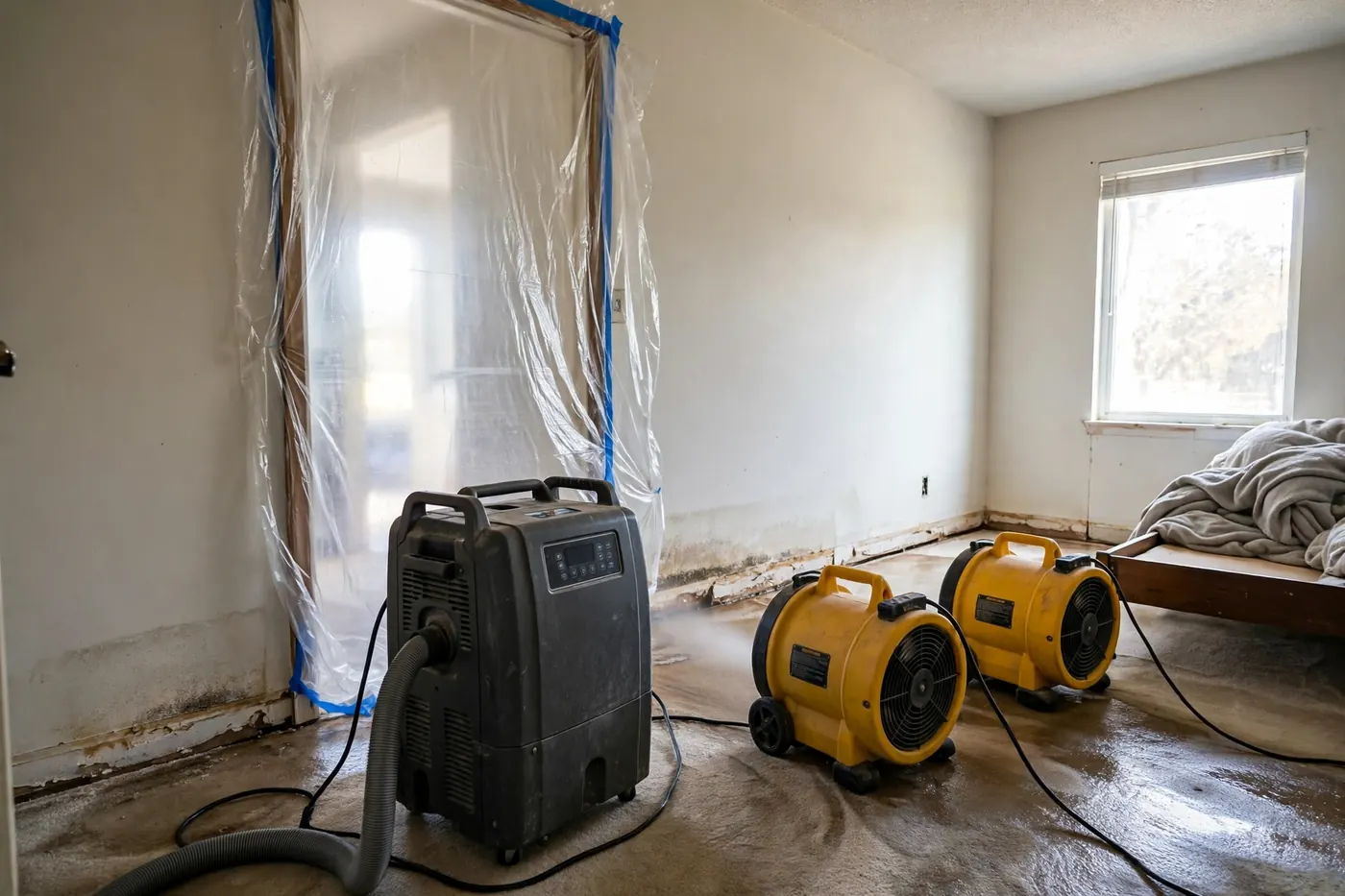
If the floor is cupping, buckling, or wet beyond a minor surface spill, ask about a moisture assessment. An independent professional may check both the boards and subfloor to evaluate whether drying or repairs are appropriate. See our water damage inspection page.
How Professional Hardwood Drying Works
Professional hardwood drying starts with measurement, not equipment. Moisture meters read the boards and the subfloor in several spots, so the crew knows how wet the floor really is and where the wettest areas are. That map decides where the drying equipment goes and how the job is tracked.
Drying itself uses airflow and dehumidification together. Air movers push dry air across the floor surface, dehumidifiers pull the moisture out of that air, and in many jobs, drying mats or panels sit directly on the floor to draw moisture out of the boards from above. Hardwood dries slowly, and rushing it is counterproductive: the goal is steady, even drying that lets boards return to shape without cracking or crowning.
Sanding and refinishing come only after the moisture readings are back to normal and the floor has settled. That patience is what separates a floor that looks good for a month from a floor that stays good. The IICRC drying standards describe this measured approach, and any thorough drying job should follow that pattern of measuring first, drying steadily, and verifying dryness before refinishing.
When Hardwood Can Be Saved and When Boards Must Be Replaced
Boards can usually be saved when the damage is cupping or surface staining, the subfloor underneath is dry or dries well, and the boards are still firmly fastened. In those cases, proper drying followed by sanding and refinishing restores the floor, and the repair blends in well.
Replacement is the right call when boards have buckled off the subfloor, warped through their full thickness, or carry deep staining or mold through the wood itself. A soaked or damaged subfloor also forces replacement, because new boards cannot sit flat on a swollen base. One practical challenge with replacement is matching: older floors have aged in colour and wear, so new boards may stand out until they are stained and finished to blend. A good crew will tell you honestly when blending is realistic and when a larger refinishing area makes more sense.
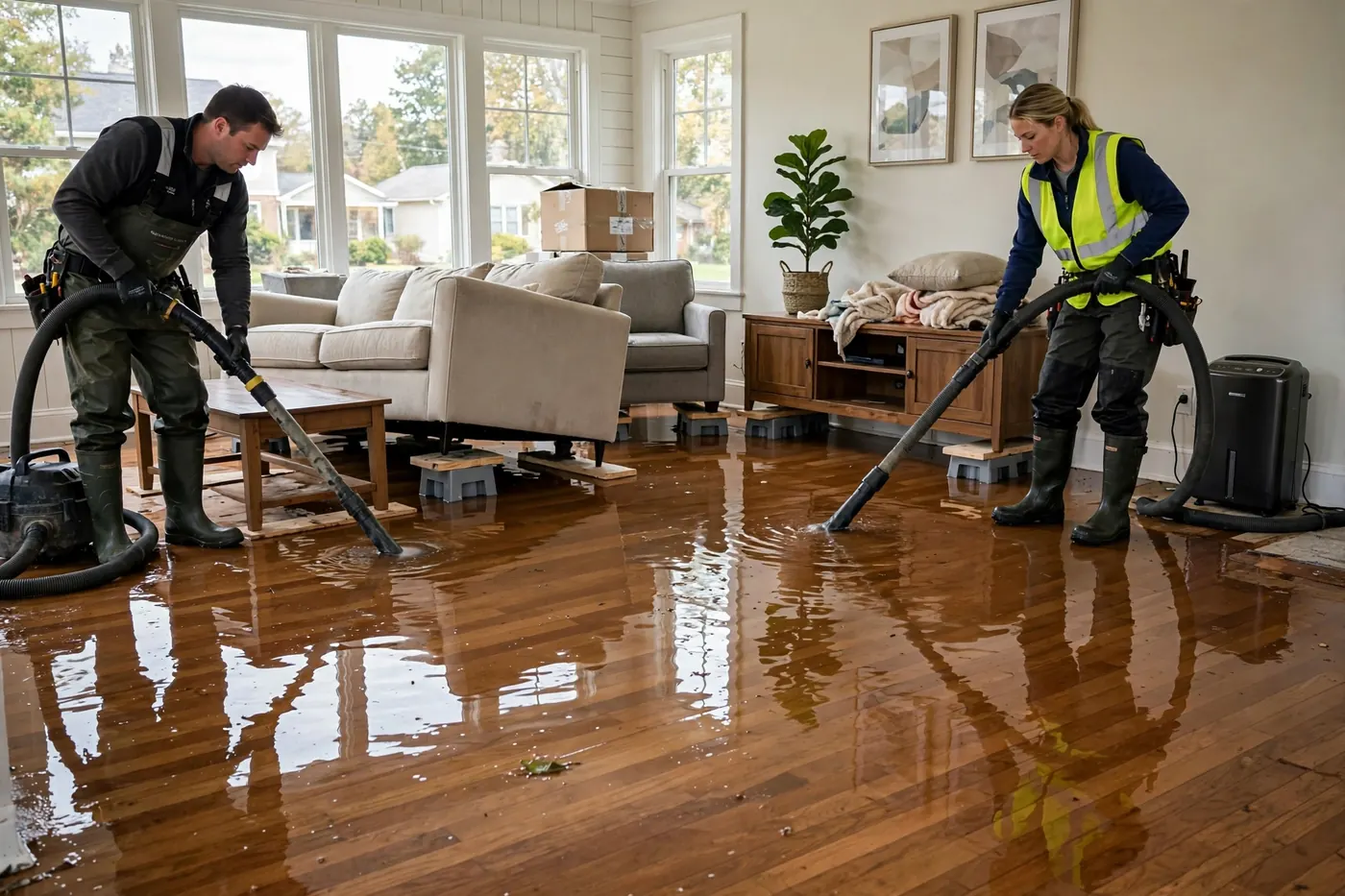
Greenville’s humid summers add one more consideration. Even after a floor is dry, indoor humidity swings can reopen small gaps between boards. Keeping indoor humidity steady and wiping up spills promptly protects both a repaired floor and one that was never damaged.
Preventing the Next Hardwood Loss in an Upstate Home
Most hardwood water damage in Upstate homes traces back to the same few sources: appliance supply lines, plumbing under sinks, and water tracked in during storms. Checking appliance hoses twice a year, looking under sinks when you clean, and using mats at exterior doors all reduce the risk. Our appliance leak water damage guide covers the hidden household sources in detail.
If water does reach your floor, the fastest way to limit the loss is the same every time: stop the source, remove standing water, and get moisture mapped before you decide on sanding or refinishing. If the damage has spread beyond one room, our Greenville water damage restoration services team can handle the full job from extraction to verified drying, and our water damage restoration service explains the process step by step. Also read our first 48 hours after water damage guide for what matters most in the first two days.
Practical Guide: Hardwood Floor Water Damage: Cupping, Buckling & Repair
Hardwood floor water damage can cause cupping, staining, swelling and, in more serious cases, boards lifting from the subfloor. Salvageability depends on the water source, how long the flooring stayed wet, the wood and finish, and the condition of the subfloor. Do not sand an actively damp floor.
Cupping, Crowning and Buckling Are Different
Cupping means board edges rise higher than the centers; crowning is the reverse. Buckling describes boards lifting or separating from their installation. These visible patterns suggest moisture or stress but do not by themselves prove whether a floor can be saved. The source and moisture level must be assessed first.
Why the Subfloor Matters
A hardwood surface can appear dry while plywood or other materials beneath remain damp. A flooring or restoration specialist may use suitable moisture measurements and inspect accessible adjoining materials to decide whether controlled drying or board removal is appropriate. Sanding before moisture stabilizes can make the final finish uneven.
When Repair May Be Better Than Replacement
Localized staining or modest cupping may be repairable after proper drying, while severe distortion, prolonged wetting or contaminated water may require removal. Matching wood species and finish can affect repairs; ask the provider to explain what can be restored rather than assuming every discolored board must be replaced.
For local assistance, see hidden moisture inspection and residential restoration. Local Greenville Restoration connects callers with independent contractors; it does not perform restoration work. Confirm services, qualifications, pricing and scheduling with the individual provider.
Frequently Asked Questions
Will cupped hardwood floors flatten on their own?
Often, yes, once the moisture source is fixed and the floor is dried properly. Cupped boards usually settle as they dry. Do not sand them while they are still cupped, or you risk crowning when they shrink.
Should I sand a wet hardwood floor?
No. Sanding wet wood removes the raised edges while the boards are swollen, and when they dry and shrink, the centres end up high. Dry the floor fully first, then evaluate whether sanding is needed.
How do I know if buckled boards must be replaced?
Boards that have lifted off the subfloor, warped through their full thickness, or carry deep staining or mold through the wood usually need to come up. A moisture check of the subfloor will confirm whether the base is sound enough for new boards.
Can dark water stains be sanded out of hardwood?
Surface stains in the finish often sand out cleanly. Deep dark stains that run through the board itself usually do not, and those boards are better replaced and finished to blend with the rest of the floor.
Does a dehumidifier help dry hardwood floors?
Yes, as part of a proper drying setup with airflow across the floor. A household dehumidifier alone rarely dries a soaked floor and subfloor, because the moisture is deep in the wood and needs directed airflow plus sustained dehumidification.
Wet Hardwood Floors in Greenville? Don’t Sand Them Yet.
Get a moisture reading first. Independent restoration contractors map how wet your boards and subfloor really are, dry the floor steadily, and tell you honestly which boards can be saved and which need replacing.