
Water Damage Categories and Classes Explained
Water Damage Categories and Classes Explained
When independent restoration contractors assess a flooded home in Greenville, the first thing we determine is the water damage categories and classes involved. Water damage categories describe how contaminated the water is, while water damage classes describe how far the water spread and how much drying the job needs. That classification shapes every decision that follows: the safety steps, what can be saved, how drying equipment is set up, and how the work is documented for your insurance file.
Water Damage Categories: What the Category Means
Water damage categories come from the industry standard restoration professionals use nationwide. Category 1 is clean water from a sanitary source. Category 2 is gray water that carries some contamination. Category 3 is black water that is heavily contaminated and must be treated with strict safety measures. The category is about the water itself, not the size of the loss — a small sewage backup is Category 3 even if it covers only one room, while a large supply-line leak starts as Category 1. The category decides the protocol: clean water is extracted and dried with standard steps, gray water calls for more careful cleaning, and black water requires protective gear, containment, and thorough cleaning of everything it touched. If you are unsure what kind of water you are dealing with, stay out of it and let a professional assessment settle the question — our water damage inspection in Greenville maps hidden moisture before any drying plan is set.
Category 1, 2, and 3: Sources and What Changes
Category 1 water comes from a clean source: a broken supply line, a faucet left running, a refrigerator water line, or rainwater that has not picked up contaminants. It starts out safe to handle, but it does not stay that way — clean water sitting in drywall, carpet padding, and subflooring absorbs dirt and microbes over time, so a Category 1 loss can degrade if drying is delayed. Category 2 gray water comes from washing machine and dishwasher discharge, sink and shower overflows. It may look clear, but it carries detergents, food particles, or bacteria, so upholstery, carpet padding, and porous belongings soaked in it need careful evaluation. Category 3 black water includes sewage backups and floodwater from outside, which picks up soil, sewage, and debris as it travels. It is a health hazard: do not enter it or try to mop it up. A Category 3 cleanup contains the area, extracts the water, removes materials that cannot be safely cleaned, and cleans and dries the rest. For sewage losses, see our guide to sewage backup cleanup in Greenville, and call our emergency water removal crews in Greenville rather than attempting it yourself.
Water Damage Classes 1 to 4: How Far the Water Spread
While categories describe contamination, water damage classes describe how much water is present and how it moves through materials. Class 1 is the smallest: a limited area with slow evaporation and minimal absorption, such as a small spill on a hard floor. Class 2 covers an entire room where water has wicked up walls and soaked carpet and padding. Class 3 is the most extensive common class: water has saturated ceilings, walls, insulation, and subfloors, often from an overhead leak. Class 4 means specialty drying for dense, low-porosity materials such as hardwood, plaster, brick, and concrete, which hold moisture deep inside and dry slowly. Class drives the drying plan: a Class 1 loss may need only extraction and airflow, while Class 2 and 3 losses need a full setup of air movers and dehumidifiers sized to the wet area, with readings tracked material by material.
Can a Water Damage Category or Class Change?
Yes, and this is the detail most short guides leave out. A Category 1 loss left sitting in warm, damp materials degrades toward Category 2 as microbes multiply, and a Category 2 loss left longer can degrade further. Time, temperature, and contact with contaminated materials all push a loss up the scale, which is why the category assigned on day one is not always the category the job finishes under. The same logic applies to classes: water that starts in one room migrates along flooring, under walls, and into cavities, so a Class 1 loss can grow while a homeowner waits to see whether it dries on its own. Moisture mapping during the first assessment catches that spread early. If you suspect hidden moisture after any leak, our guide to the signs of hidden water damage explains what to look for.
How Category and Class Shape Your Restoration Plan
Once category and class are set, the plan follows in outline: extraction first, then a drying setup matched to the class, then cleaning matched to the category, then monitoring until readings verify the structure is dry, and finally repairs. Category 3 jobs add containment and removal of unsalvageable porous materials. Class 4 jobs add specialty drying for wood floors, cabinets and vanities, wall cavities, and dense masonry. Every job gets photo documentation and moisture readings for the insurance file. For homeowners in Greenville, Spartanburg, and Anderson, the practical takeaway is simple: call early, stay out of contaminated water, and do not judge a loss by how it looks on the surface. Start with our water damage restoration services in Greenville or from the Greenville water damage restoration team homepage, or call (864) 499-8074 to get the category and class assessed properly.
Important Details for Water Damage Categories and Classes Explained
A Water Category Describes Contamination
Category 1 generally describes water from a sanitary source, Category 2 has substantial contamination and Category 3 is grossly contaminated. The source and conditions matter: water quality may change after contacting soil, sewage or other materials, so homeowners should not guess from color alone.
A Water Damage Class Describes Drying Needs
The drying class relates to how much water has been absorbed and the materials involved. A small local leak and deeply saturated wood or concrete call for different equipment and timeframes. The class is not a severity score for insurance coverage and should be assessed by a qualified professional.
Why Both Numbers Matter
A property can have a relatively limited area of highly contaminated water or a large amount of comparatively cleaner water. Cleanup precautions depend strongly on contamination; drying decisions depend on wet materials and the extent of absorption. Ask the contractor to explain both assessments before approving the scope.
To discuss a specific water damage problem, explore water damage assessment and emergency water extraction. Independent contractors confirm their own services and schedules.
Frequently Asked Questions
What is Category 3 water damage?
Category 3 water is heavily contaminated water, including sewage backups and floodwater from outside. It is a health hazard, so stay out of it and let professionals handle the cleanup with protective gear and containment.
Can clean water become contaminated?
Yes. Category 1 clean water sitting in damp materials absorbs dirt and microbes over time and can degrade into Category 2. Fast extraction and drying keep a clean-water job from becoming a harder one.
What is Class 4 water damage?
Class 4 means specialty drying is needed for dense materials such as hardwood, plaster, brick, and concrete. These hold moisture deep inside and dry slowly, so drying is measured material by material.
Does the category affect what can be saved?
Yes. Clean-water losses usually allow more materials and belongings to be dried and saved. Gray-water and black-water losses require more removal, because porous items soaked in contaminated water often cannot be restored safely.
Who determines the category and class of my loss?
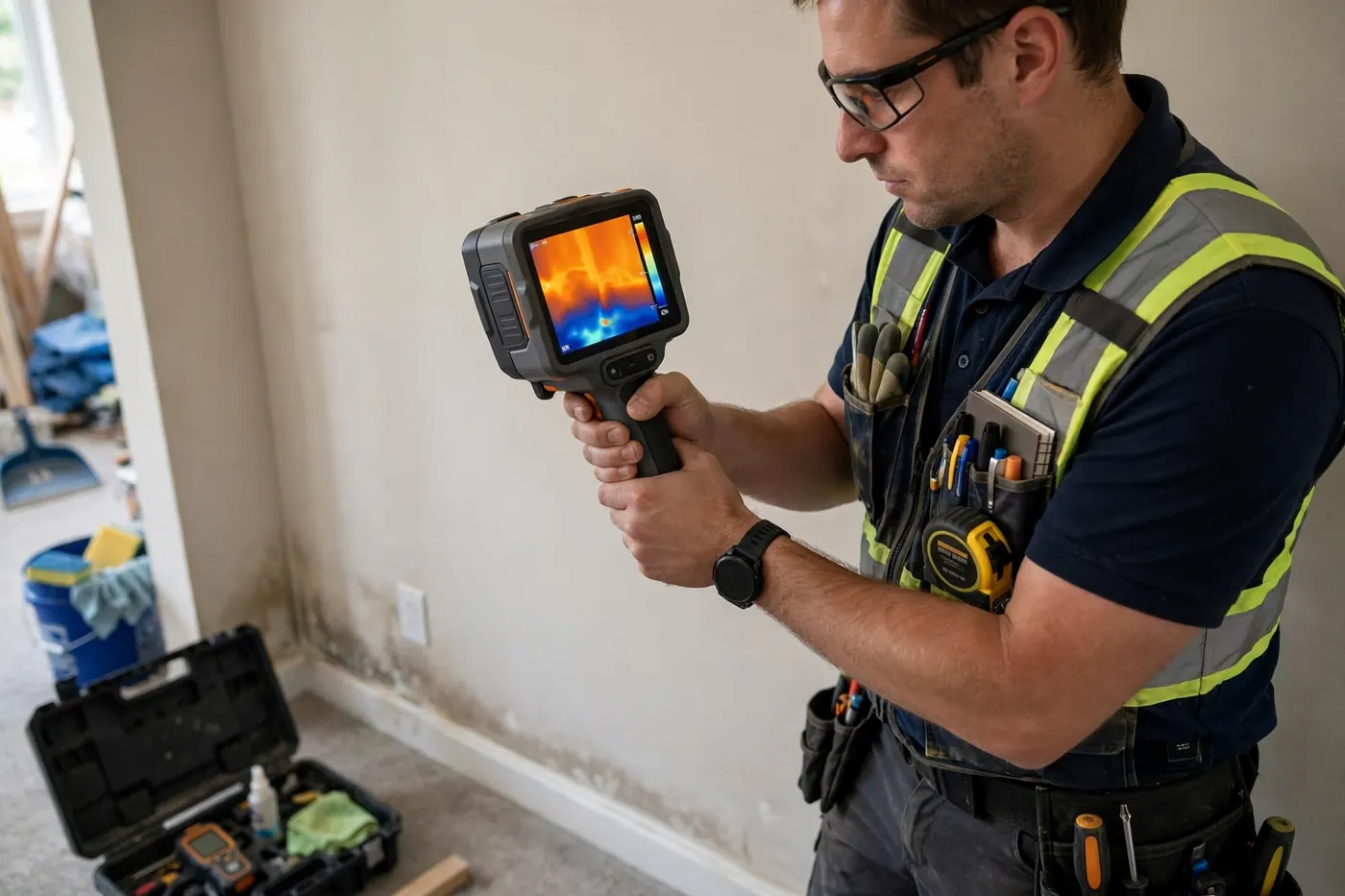
The restoration crew determines both during inspection and assessment, using the water source, visible spread, moisture meter readings, and thermal imaging to map hidden moisture before the drying plan is set.
Not Sure What Kind of Water You Are Dealing With?
Do not guess with contaminated water. Independent restoration contractors assess the category and class, map the moisture, and set a drying plan matched to your loss — call now and get the assessment started.