
Appliance Leak Water Damage: Hidden Risks in Greenville Homes
Appliance Leaks: The Hidden Water Damage Risk in Greenville Homes
Appliance leak water damage in Greenville homes rarely announces itself. A washing machine hose, a dishwasher supply line, or a refrigerator water line can drip for weeks behind or beneath a machine nobody moves, soaking the floor, the subfloor, and the wall behind it. By the time anyone notices a musty smell or a warped board, the damage has spread far beyond the appliance itself. This guide walks through the four household culprits independent restoration contractors see most, the warning signs for each, and exactly what to do the moment you find one.
Why Appliance Leaks Cause So Much Damage
The danger of an appliance leak is how quiet it is. A burst pipe floods a room in minutes and everybody knows about it. A slow appliance drip does the opposite: it feeds a small, steady patch of dampness into wood, drywall, and insulation, day after day. Greenville’s warm, humid air makes the problem worse, because damp building materials in a humid home stay damp longer and start to smell musty sooner.
That slow spread is also why appliance leaks are so often found late. The washer sits against a wall. The dishwasher hides behind a cabinet panel. The refrigerator line runs through a dark gap behind the fridge. Nobody inspects those spots in daily life, so a leak can run until the floor buckles, the baseboard swells, or a stain appears on the ceiling below. Checking those hidden spots on a schedule is the single best habit for avoiding this kind of loss.
Washing Machine Hoses: The First Place to Look
Washing machines cause more appliance water damage than any other household machine, and the hose is almost always the reason. Rubber washer hoses age, weaken, and eventually bulge or split, especially at the connection points. Braided stainless steel hoses hold up far better, so if your machine still has plain rubber hoses, replacing them is one of the cheapest protective jobs in the house.
Check the hoses twice a year. Pull the machine out just far enough to see behind it, and look for bulges, cracks, dampness, or rust on the connections. Also check the shutoff valves on the wall: turn them gently to make sure they still move, because a seized valve is useless in an emergency. Look at the floor and the wall behind the machine for discoloration, and check the drain hose to make sure it is seated properly in the drain pipe.
If you find the floor damp behind the washer, stop using the machine, shut off its valves, and let the area dry. A damp patch that keeps coming back after the machine is off usually means water has reached the subfloor, and that is worth a professional moisture check before you slide the machine back and forget about it.
Dishwasher Leaks: Small Drips, Big Floor Damage
Dishwasher leaks are sneaky because the machine sits inside cabinetry. The usual culprits are a worn door seal, a loose supply connection under the sink, or a drain hose that has worked itself out of position. Any of them can release a slow drip that soaks the floor under and around the machine, then travels under adjacent cabinets and into the subfloor.
The signs are subtle: a floorboard near the dishwasher that feels slightly raised, a faint musty smell in the kitchen that cleaning does not fix, or dampness inside the cabinet under the sink. If you notice any of them, run the dishwasher and watch underneath the sink and along the kick plate for fresh drips. Catching a dishwasher leak early usually means a repair and a small drying job. Missing it for months can mean swollen cabinets, warped flooring, and a much larger repair.
Refrigerator Water Lines and Water Heaters
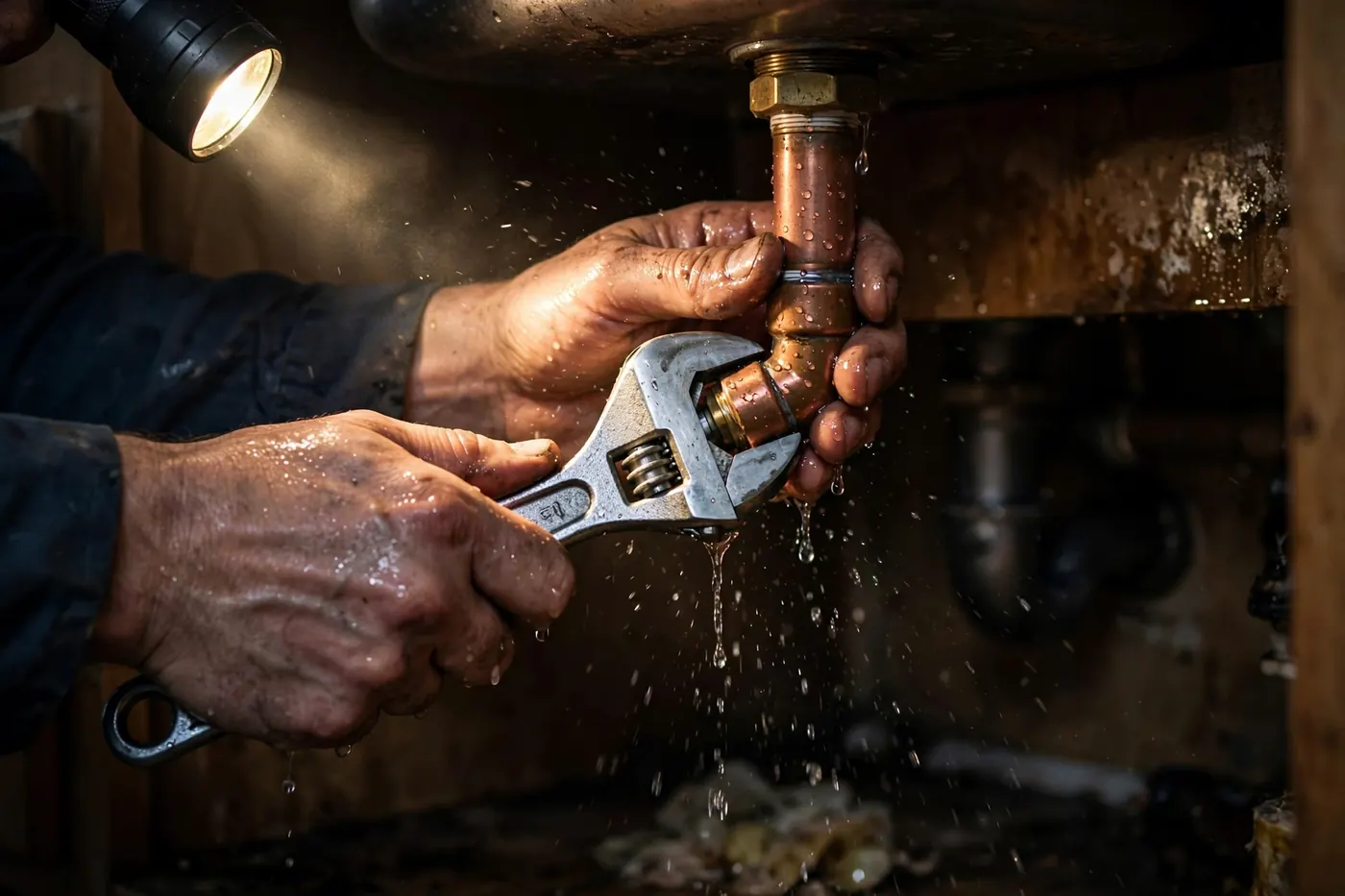
If your refrigerator has an ice maker or water dispenser, a thin supply line runs to it, and that line is a common leak source. Plastic lines become brittle with age, and a pinhole leak behind the fridge can soak the floor for a long time before anyone notices. When you pull the fridge out for cleaning, check the line for kinks, cracks, and dampness at both ends, and consider a braided or copper line if yours is still plastic.
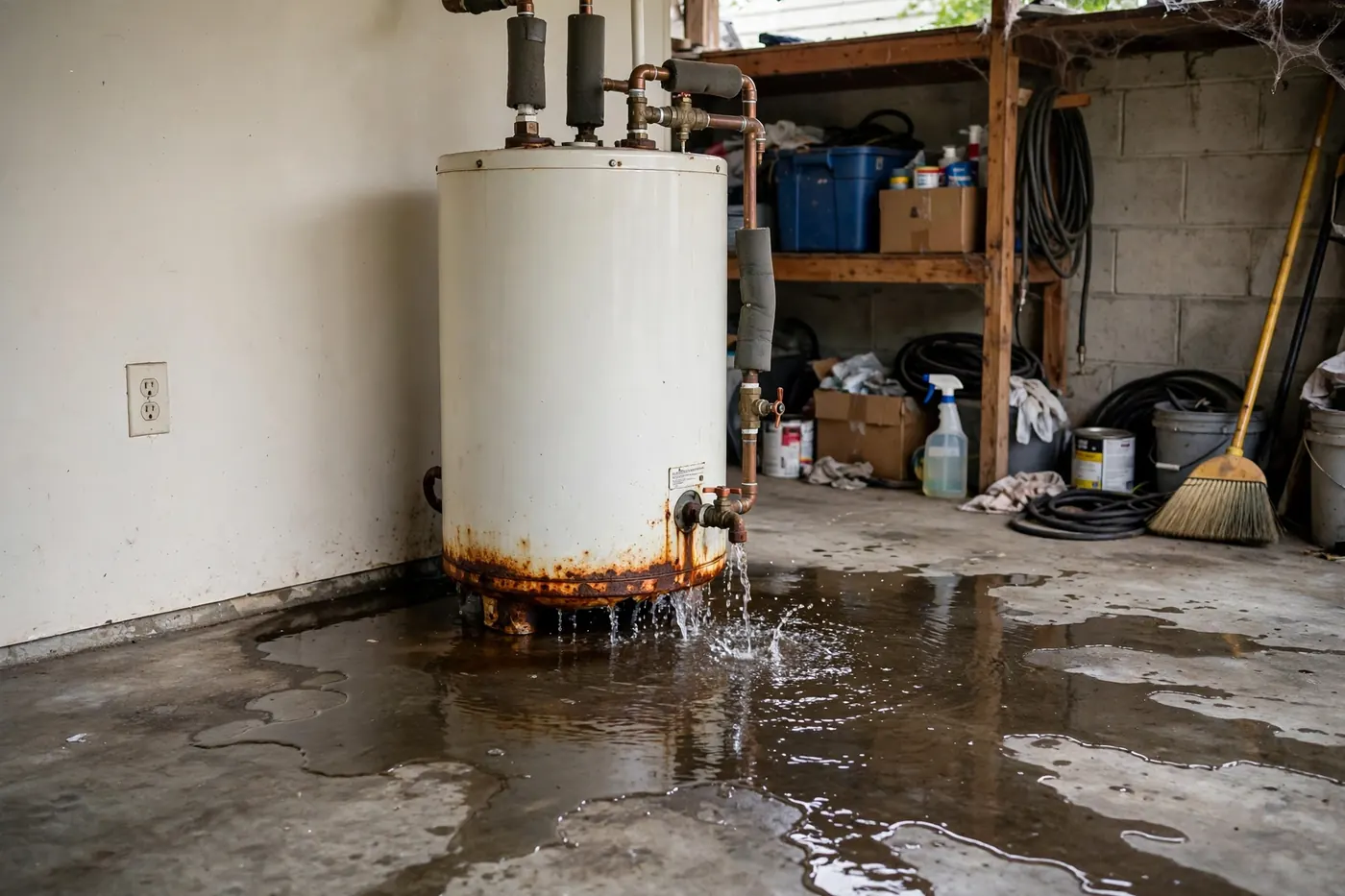
Water heaters deserve the same attention. Look at the base of the tank and the drain pan for puddles, rust streaks, or dampness, and check the relief valve discharge pipe for dripping. A water heater in a garage or utility closet can leak unnoticed for a long time, especially if the closet door stays closed. A quick look once a month takes less than a minute and catches most heater leaks while they are still small.
Warning Signs You Should Never Ignore
- A musty smell in the kitchen, laundry room, or utility closet that does not go away with cleaning.
- Flooring that feels raised, soft, or spongy near an appliance.
- Peeling paint, swollen baseboards, or a water stain on the ceiling below a laundry room or kitchen.
- A water bill that climbs without any change in how much water your household uses.
- Dampness inside the cabinet under the kitchen sink, or around the base of the fridge.
If you notice unexplained dampness or a recurring appliance leak, stop the source if safe and arrange a suitable inspection. A qualified provider may use moisture measurements to determine whether water has entered walls, cabinets, or subfloors. See our water damage inspection guide.
What to Do the Moment You Find an Appliance Leak
First, stop the water. Every appliance has a shutoff valve nearby: behind the washer, under the sink for the dishwasher, and at the wall connection for the fridge. If you cannot find the appliance valve, or the leak is large, shut off the main water valve to the house. Second, if water is anywhere near an electrical outlet or the appliance cord, do not step in it; shut off power to that area from the breaker panel if you can do so safely.
Third, move rugs, boxes, and anything stored near the leak, and soak up standing water with towels. Take photos of the leak, the appliance, and any damaged flooring or cabinets before you move things around, because those photos matter for any insurance conversation later. Our guide to homeowners insurance for water damage in South Carolina explains what to document and why.
Finally, call for help if the water has reached flooring, walls, or rooms beyond the appliance area. If the damage has already spread, our Greenville home water damage restoration team can extract the water, map how far the moisture travelled, and dry the structure properly. For standing water that needs removing right away, see our emergency water removal service, and read our signs of hidden water damage guide if you suspect water has reached places you cannot see. The IICRC publishes the professional standards that proper water damage drying follows, which is a useful reference for what a thorough drying job should include.
Practical Guide: Appliance Leak Water Damage: Common Sources & Fixes
A slow or sudden leak from a washer, dishwasher, refrigerator line or water heater can soak flooring and wall cavities before the damage is visible. Stop the water source if safe, avoid electricity near wet appliances, document the affected area and evaluate whether water has spread beneath finishes.
Check the Supply and Drain, Not Just the Appliance
Washing machines have supply connections and drain hoses; dishwashers have inlet fittings and drain connections; refrigerators may use small water lines; water heaters can leak from fittings or the tank. Different failure points call for different repairs, and a plumbing or appliance specialist may need to resolve the source before restoration begins.
How to Tell Whether Water Reached Another Room
Watch for swelling near baseboards, soft flooring, cabinet staining or moisture appearing on the other side of a wall. A clean-looking surface does not rule out trapped water beneath flooring. Ask whether a moisture assessment is appropriate before reinstalling appliances or closing wet cavities.
A Sensible Cleanup Sequence
Shut off water if safe, keep away from wet electrical fixtures, take photos and notify your insurer if a claim may apply. A qualified provider can assess extraction, drying and necessary material removal. Fix the leak source before cosmetic repair, and test the affected appliance only when it is safe to do so.
For local assistance, see pipe leak cleanup and hidden moisture inspection. Local Greenville Restoration connects callers with independent contractors; it does not perform restoration work. Confirm services, qualifications, pricing and scheduling with the individual provider.
Frequently Asked Questions
How often should I check appliance supply lines?
Check washer, dishwasher, and refrigerator lines twice a year. Look for bulges, cracks, and dampness at the connections, and replace plain rubber washer hoses with braided stainless steel lines.
What is the first thing to do when a washing machine hose bursts?
Shut off the valve behind the machine, or the main water valve if you cannot reach it. Do not step in water near electrical outlets. Move items away from the water, soak up what you can, and call for help if flooring or walls got wet.
Can a small dishwasher drip really damage a floor?
Yes. A slow drip soaks the subfloor and the base of nearby cabinets, warps flooring, and feeds musty smells. Because the leak hides behind cabinetry, it often runs for months before anyone notices.
How do I know if my water heater is leaking?
Look for a puddle or dampness in the drain pan, rust streaks at the base of the tank, or a dripping relief valve pipe. Check once a month, since heater leaks in a closed utility closet can run unnoticed for a long time.
Does homeowners insurance cover appliance leak damage?
It often covers sudden failures, like a hose that bursts, but long-term slow leaks that went unreported are often excluded. Check your policy, document everything with photos, and report the damage promptly.
Found an Appliance Leak in Your Greenville Home?
Stop the water, take photos, and call us. Independent restoration contractors trace how far the moisture travelled, extract the water, and dry floors and walls properly so a small leak does not turn into a large repair.