
Sump Pump Failure and Basement Flooding: First Steps
Sump Pump Failure and Basement Flooding: First Steps
A sump pump failure and basement flooding often arrive together, usually during the heaviest rain, when the pump is needed most. The pump sits in a pit at the lowest point of the basement floor, collecting groundwater and discharging it away from the foundation. When it stops, groundwater keeps rising and the basement floor is where it goes. This guide covers why sump pumps fail, the first steps when a basement floods, and the testing routine that prevents the next flood.
Why Sump Pumps Fail — and the Warning Signs
Most sump pump failures fall into a handful of causes. Power loss is the most common: the same storms that drive groundwater up also knock power out. A stuck or tangled float switch is next — the float that should rise with the water can jam against the pit wall, snag on a cord, or stick on debris. An undersized pump cannot keep up with heavy inflow and runs until it overheats. A frozen or clogged discharge line sends water back toward the foundation or blocks the pump entirely. A failed check valve lets discharged water drain back into the pit, so the pump cycles rapidly and wears out early. And like any motor, a pump wears out — bearings grind, impellers clog, and seals fail. A failing pump usually warns you first: grinding or rattling noises, a motor that runs constantly without lowering the water, rapid on-off cycling, visible rust, or a pit that stays wet between rains. Any one of these means service before the next storm, not after it. If your basement has flooded, our basement water damage services in Greenville cover extraction, drying, and cleanup.
Sump Pump Failure Basement Flooding: First Steps
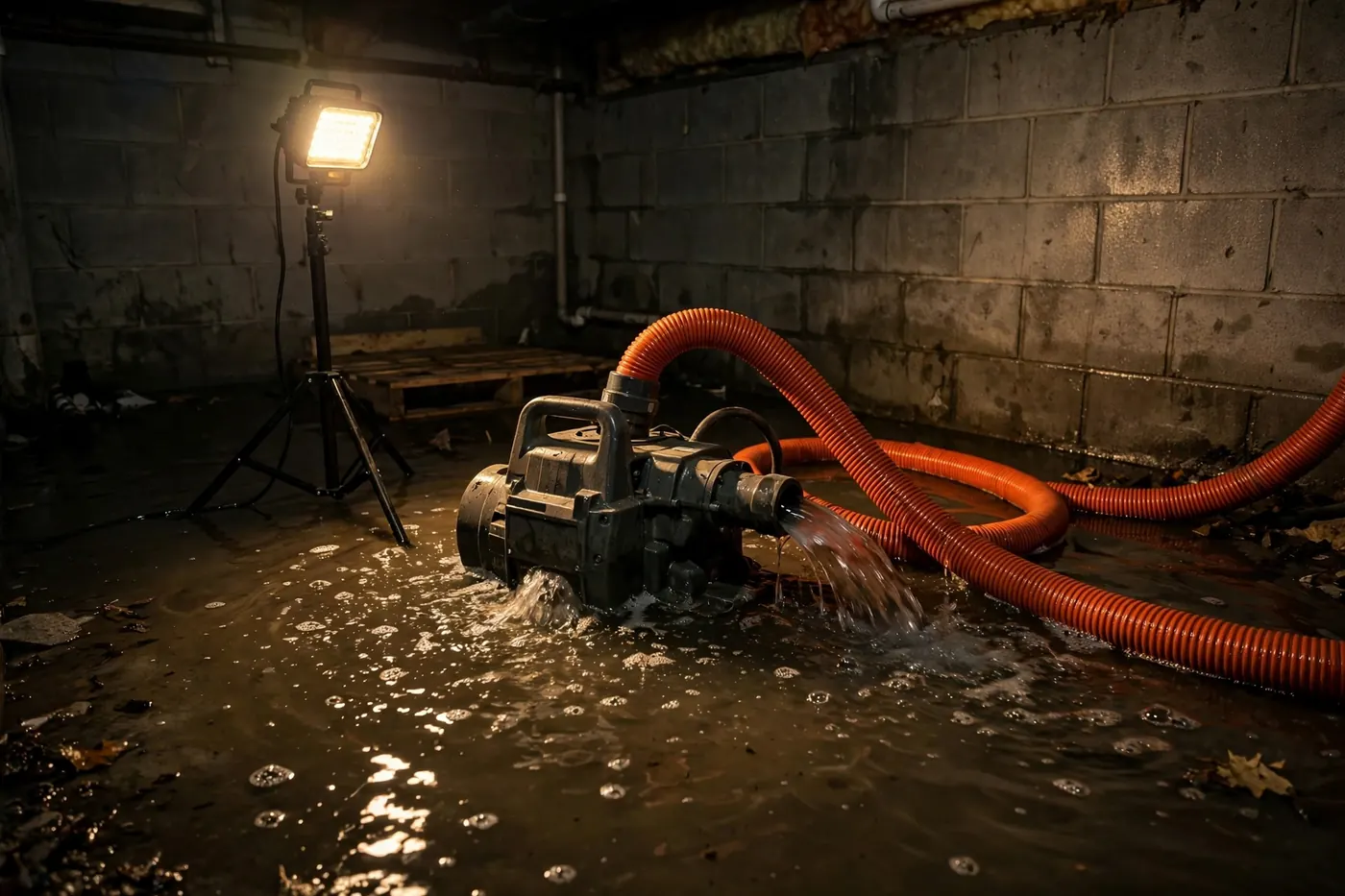
When you discover a flooded basement, safety comes before cleanup. Do not step into standing water until power to the flooded area is off — and if reaching the breaker panel means wading through water, stay out and call for help. From a dry location, shut off power to the basement circuits, then put on waterproof boots and gloves before entering. Sump pit water is not clean water, so avoid splashing and keep children and pets out entirely. Next, get the water level down: a wet/dry vacuum handles small amounts, while a portable utility pump with a discharge hose to the outside handles larger volumes while you diagnose the main pump. Move belongings to higher ground, starting with electronics, documents, and anything on the floor. Photograph the water level, pit, pump, and damage before moving things, since that record supports any claim. Check whether a battery backup or secondary pump is present and working. If water is rising faster than you can control, call our emergency water removal crews in Greenville rather than waiting it out.
Diagnosing the Failed Pump Safely
Do not diagnose or operate a sump pump while standing in water, and never touch submerged outlets, switches, or electrical equipment. After the area is confirmed safe, a qualified plumber or pump technician can assess the power supply, float mechanism, discharge line, check valve, and motor. If the pump cannot remove accumulated water, ask a restoration provider about extraction and drying while the mechanical problem is addressed.
Testing Your Sump Pump and Preventing the Next Flood
Testing takes minutes and prevents most failures. Pour a bucket of water into the pit and confirm the pump kicks on, moves water out, and shuts off cleanly. Watch the discharge outside to confirm water leaves the house rather than draining back. Lift the float to confirm it moves freely, clear debris from the pit, and check the discharge line for kinks, clogs, or freeze risk. Test before storm season and again after any long dry spell, and test any battery backup the same way. Prevention is a short list done regularly: add a battery backup pump, consider a water alarm in the pit, store belongings on shelves or pallets, not directly on the floor, and keep gutters and discharge routes clear. One honest boundary: permanent basement waterproofing systems are a separate trade from water damage cleanup. For everything after a flood, start with our basement water damage restoration in Greenville, our flooded house checklist, or the water damage restoration help in Greenville SC homepage — or call (864) 499-8074 when water is already on the floor.
Important Details for Sump Pump Failure: Basement Flooding First Steps
Common Reasons Sump Pumps Fail
A stuck float switch, blocked discharge pipe, worn motor or loss of electrical power can prevent a sump pump from working. Do not touch electrical equipment while standing in water; have the source assessed by a qualified professional when the area is safe.
Backup Pumps and Overflow Alarms
Battery-backed pumps and water-level alarms may offer additional protection, but each has limits. A backup must have suitable capacity and a maintained power source. Drainage, grading and foundation problems can still cause flooding even with a functioning pump.
Cleanup After a Pump Failure
Removing standing water does not automatically dry drywall, flooring, stored belongings or framing. An independent contractor can discuss extraction, moisture assessment, drying and repairs; a pump specialist may separately evaluate the mechanical failure.
To discuss a specific water damage problem, explore water damage assessment and emergency water extraction. Independent contractors confirm their own services and schedules.
Frequently Asked Questions
Does homeowners insurance cover sump pump failure?
It depends on your policy: standard policies often do not cover water backing up from a failed sump pump unless you carry a water backup or sump overflow endorsement. Check your wording and talk with your agent before the next storm — general guidance, not a coverage promise.
How often should I test my sump pump?
Test it before storm season and again after any long dry spell. Pour a bucket of water into the pit and confirm the pump starts, discharges outside, and shuts off cleanly, and test any battery backup the same way.
What if my sump pump runs constantly?
Constant running can mean an undersized pump, a failed check valve letting water drain back into the pit, or inflow the pump cannot match. Check the check valve and discharge first, and have the pump serviced if it keeps running.
Do I need a battery backup sump pump?
If your basement has flooded before or your area loses power during storms, a battery backup is the single most useful safeguard: it keeps the pit pumping when the main pump has no power.
Basement Flooding Right Now?
Do not wait while the water rises. Independent restoration contractors extract the water, map how far it spread, and start measured drying — call now and get the basement under control.