
What to Do After Water Damage: The First 48 Hours
What to Do in the First 48 Hours After Water Damage
Knowing what to do after water damage in the first two days decides whether you face a drying job or a much larger repair. Water spreads fast: it wicks up drywall, soaks subflooring, and migrates into wall cavities while a homeowner decides what to do. This guide walks through the first 48 hours after water damage in the order independent restoration contractors recommend — safety first, then documentation, then drying — so you protect your family, your belongings, and your claim.
The First Hour: Safety and Stopping the Water
Your first job is safety, not cleanup. If water is near outlets, cords, or appliances, do not step into it to reach the breaker panel — if you would have to wade through standing water to cut power, stay clear and call for help. When you can do so from a dry location, shut off electricity to the wet areas and shut off the water source: the main valve for a burst pipe, the appliance valve for a washer or dishwasher leak. If the ceiling below a leak is sagging or bulging, keep people and pets out from under it, because saturated drywall can collapse without warning. Contaminated water changes the rules: sewage backup and floodwater are health hazards, so do not enter them or try to mop them up. Once the immediate danger is handled, call our emergency water removal crews in Greenville so extraction can begin while you work through the rest of this list.
Document Everything Before You Move Anything
Before you move furniture, pull up rugs, or start drying, photograph and video everything. Take wide shots of each room, then close-ups of the water line, damaged materials, the source if it is visible, and every affected belonging, including appliance serial plates where you can. This record is what your insurance adjuster works from, and damage thrown away before it is recorded is hard to claim later. Start a simple claim log alongside the photos: the time you discovered the water, when you shut off water and power, who you called and when, and anything you spend because of the loss. Keep receipts and keep damaged items until they have been photographed and listed. Our guide to homeowners insurance and water damage in South Carolina explains how that documentation supports your claim.
What to Do After Water Damage: Protecting What Can Be Saved
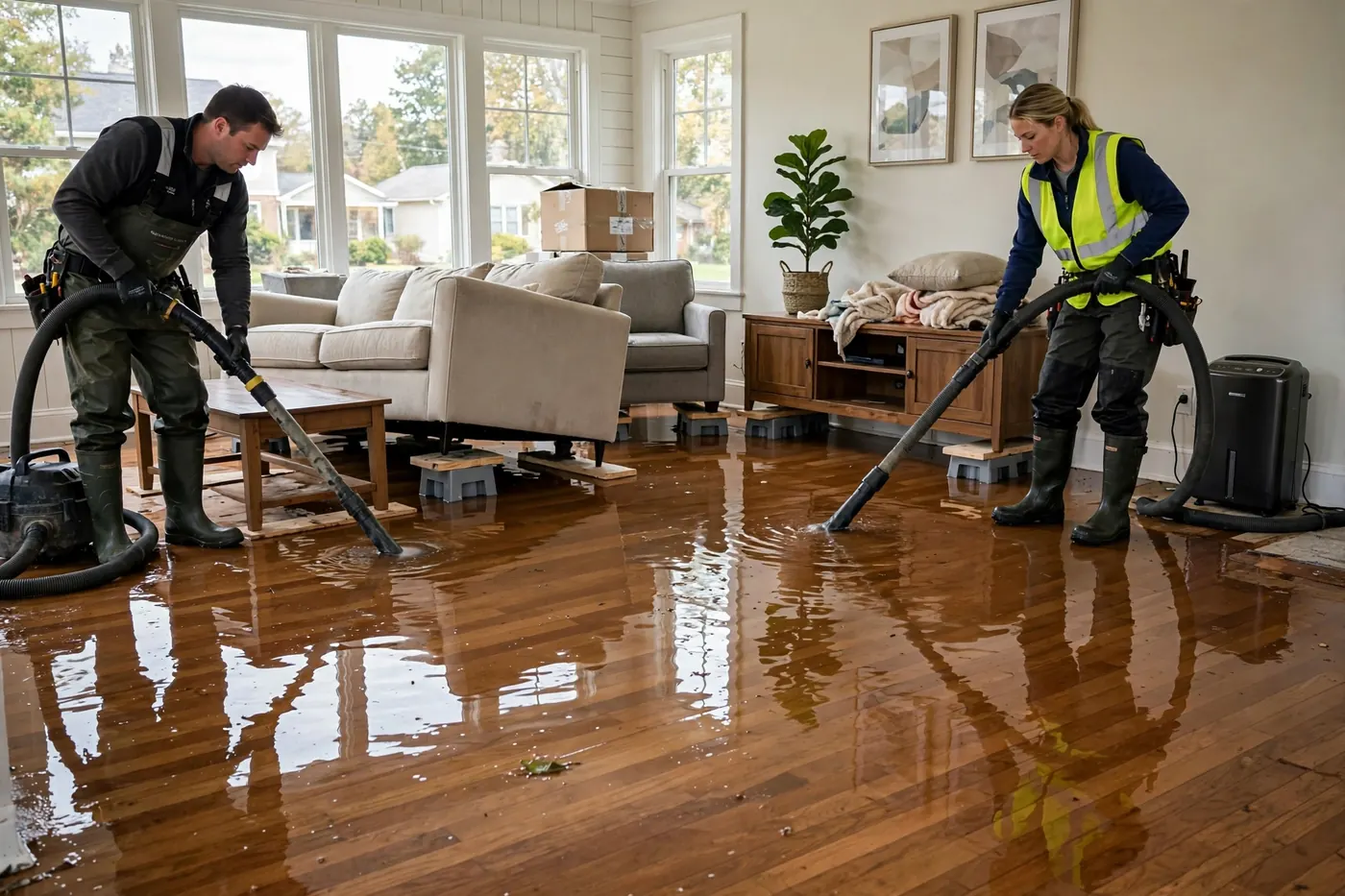
With safety and documentation handled, protect what can still be saved. Move electronics, documents, rugs, cushions, and valuables to a dry room. Put foil or wood blocks under furniture legs so finishes do not stain wet flooring, pull rugs off wet floors, open drawers and cabinet doors so air can reach inside, and move cardboard boxes, books, and fabric bins off the floor. Do not use a household vacuum on standing water, do not run ceiling fans under a wet or sagging ceiling, and do not aim fans at visibly moldy surfaces, since that spreads spores through the house. If the weather is dry and power is safe, open windows to help ventilation, but on a humid Upstate day open windows can push more moisture indoors — mechanical drying with fans and a dehumidifier, used only where electricity is safe, is the reliable route. Do not wait for your adjuster before drying begins: every policy expects you to prevent further damage.
Day One and Day Two: Extraction, Drying, and Verification
Day one belongs to extraction and assessment. Standing water comes out with pumps and professional extraction units, then the crew maps hidden moisture with meters and thermal imaging to find water in walls, under floors, and inside cavities. That map decides where drying equipment goes and what, if anything, must be opened so trapped water can escape — demolition before documentation is the step to avoid, not the opening itself. Drying equipment is then set to the size of the wet area: air movers push moisture out of materials and dehumidifiers pull it out of the air. Day two is about verification: moisture readings are compared against dry reference points for each material, and equipment is adjusted or moved as the wet area shrinks. Materials are not declared dry because they feel dry — they are declared dry because readings say so. Only after drying is verified do repairs begin. For flood losses, our flood damage cleanup guide for Greenville covers the extra contamination steps floodwater adds, and Ready.gov publishes flood safety guidance on hazards like electricity around water. If water has entered your home, start with our water damage restoration services in Greenville, our flooded house checklist, or the Upstate SC water damage restoration homepage, or call (864) 499-8074.
What NOT to Do After Water Damage
The mistakes independent restoration contractors see most often are all avoidable. Do not enter standing water where electricity may be live. Do not throw away damaged items before photographing them. Do not paint, rebuild, or install new flooring over materials that have not been evaluated and verified dry. Do not run a household vacuum in standing water or aim fans at visibly moldy surfaces. Do not ignore a musty smell or a warped floorboard after the visible water is gone — both can mean moisture is still trapped where you cannot see it. And do not let a small leak wait for a convenient day: the first 48 hours after water damage are when a manageable job stays manageable.
Important Details for First 48 Hours After Water Damage: Action Guide
Your First Priority Is Safety
Do not enter water near electrical equipment, submerged outlets or unstable ceiling materials. Avoid direct contact with sewage or outside floodwater. Stop a reachable plumbing shutoff only if doing so poses no danger, and contact qualified help for hazardous conditions.
Documentation and Moisture Assessment
From a safe location, take broad room photographs and close-ups of the source, affected materials and belongings. Record when you discovered the leak. After water removal, ask whether walls, flooring and enclosed spaces still need moisture checks before repairs.
The 24–48 Hour Drying Window
EPA recommends drying wet materials promptly—ideally within 24–48 hours—to limit mold growth in many circumstances. Serious contamination and soaked porous materials may require specialist cleanup or removal rather than ordinary fans. Ask a contractor to explain the plan based on the source and extent of water damage.
To discuss a specific water damage problem, explore water damage assessment and emergency water extraction. Independent contractors confirm their own services and schedules.
Frequently Asked Questions
Should I wait for my insurance adjuster before drying begins?
No. Every policy expects you to prevent further damage, so document everything with photos first, then start extraction and drying. Waiting while water sits turns a drying job into a larger repair.
Can I use household fans to dry water damage?
Household fans help only for small, clean-water wet spots where power is safe. For anything larger, professional air movers and dehumidifiers sized to the wet area do the real drying, and fans should never be aimed at visibly moldy materials.
Is it safe to enter a flooded basement?
Only after power to the area is off and you can confirm there is no electrical hazard. Never step into standing water to reach a breaker panel, and never enter sewage or floodwater, which are health hazards.
What should I photograph for my claim?
Wide shots of each room, close-ups of the water line and damaged materials, the source if visible, affected belongings, and appliance serial plates. Keep a log of discovery time, shutoff times, calls made, and every receipt.
When can repairs start after water damage?
After drying is verified by moisture readings against dry reference points for each material. Repairs put onto a structure that is not yet verified dry risk trapping moisture behind new finishes.
Water in Your Home Right Now?
Do not wait out the first 48 hours — call now and independent restoration contractors will start extraction and measured drying.