
Water Damage Inspection & Assessment in Greenville, SC
Suspect hidden water damage? Our Greenville inspectors find it with thermal imaging and pro moisture meters — then give you a straight, written assessment.
Professional Water Damage Inspection in Greenville, SC
Most serious water damage in Greenville homes is invisible. It hides inside wall cavities, under flooring, above ceilings, and in crawl spaces — quietly rotting framing and growing mold for months while the visible surfaces look fine. Our water damage inspection service exists to find what you can’t see: using thermal imaging cameras and professional-grade moisture meters, we map hidden moisture precisely and give you a written assessment of what we found, what it means, and what (if anything) needs to happen next.
Who calls us for inspections? Homebuyers who want to know what they’re really buying (especially in Greenville’s older neighborhoods with aging plumbing). Homeowners with a mysterious musty smell, a water bill that jumped for no reason, or a stain they’re not sure about. Insurance claimants who want an independent moisture map. And property managers who need documented conditions between tenants. In every case, you get the same thing: thorough detection, honest findings, zero pressure.
Here’s our philosophy, stated plainly: an inspection should tell you the truth, including when the truth is ‘you’re fine.’ We don’t invent problems to sell remediation. If our meters say your home is dry, we’ll tell you that — and show you the readings. If we find moisture, you’ll see exactly where, how much, and what we recommend, in a written report with photos you can keep, share with your insurance, or hand to any contractor.
If the inspection reveals active damage, our restoration team takes it from there — same crew, no handoffs. And if water is flowing right now, skip ahead to emergency water removal.
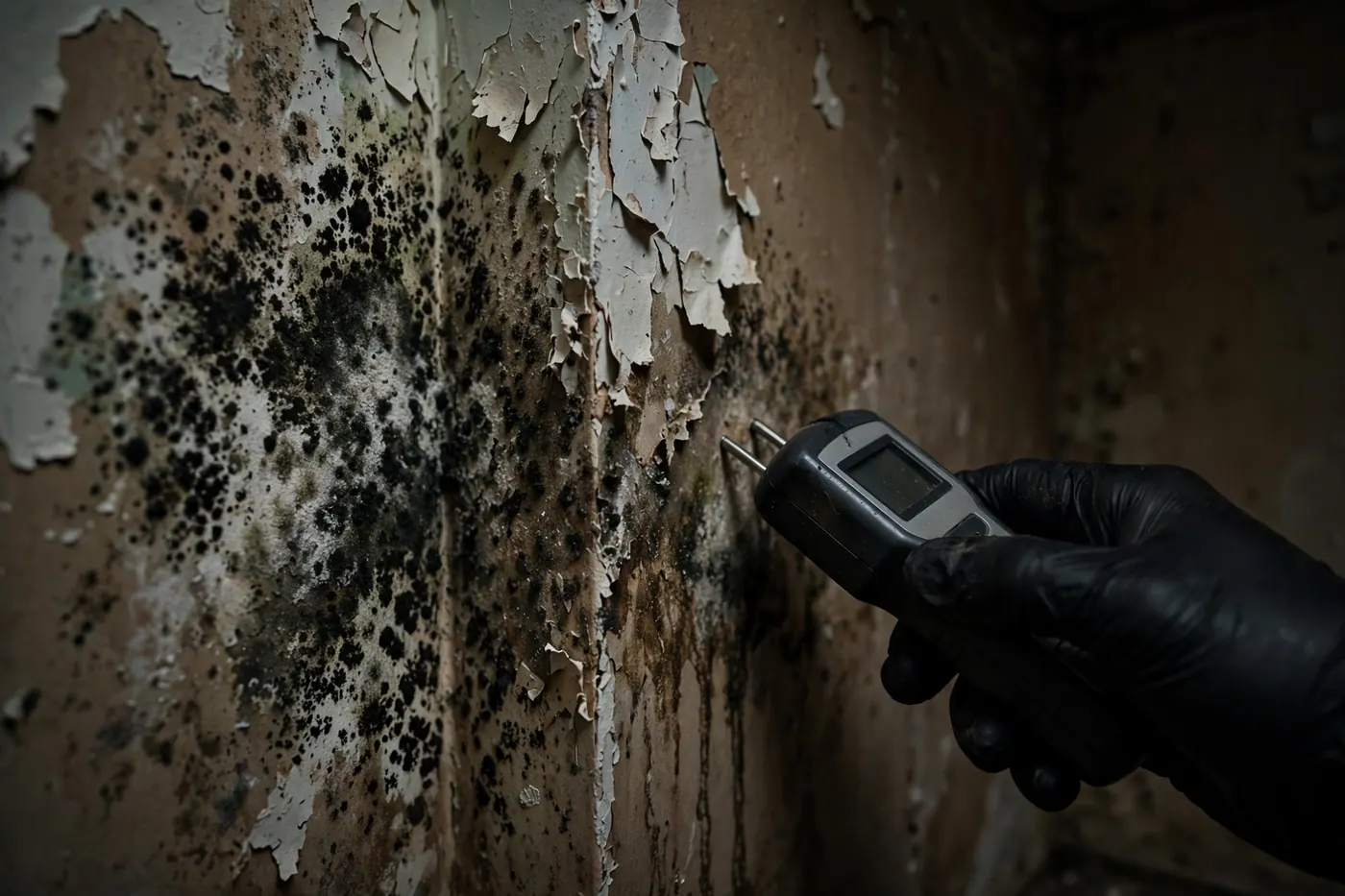
When to Get a Water Damage Inspection
Our pre-purchase moisture inspections have saved buyers from inheriting rotted subfloors, hidden mold, and failing plumbing. A few hundred dollars now vs. tens of thousands later.
If it smells damp but looks dry, moisture is hiding somewhere — wall cavity, crawl space, under flooring. We find where.
A sudden jump often means a hidden supply leak — potentially inside walls or under the slab, soaking your structure silently.
Was the area truly dried before it was closed up? We verify — because trapped moisture becomes mold within weeks.
That stain you’re watching is telling you something. An inspection now is cheap; the repair after six more months of leaking is not.
Find and fix moisture issues on your terms — not during a buyer’s inspection when it costs you the deal or thousands in credits.
What’s Included in Our Inspection
- Full walkthrough of concern areas plus adjacent spaces (water travels)
- Thermal imaging scan of walls, ceilings, and floors
- Pin and pinless moisture meter readings at every suspect location
- Crawl space and attic evaluation when relevant
- Plumbing fixture and visible pipe assessment
- Grading and gutter observations affecting water intrusion
- Written report with photos, readings, and findings
- Clear recommendations — including ‘no action needed’ when that’s the truth
- No-pressure consultation: ask us anything about what we found
Cost of Water Damage Inspection
What Affects the Cost?
A professional water damage inspection in Greenville, SC typically costs $200–$400 depending on home size and scope — and it’s credited toward any restoration work if you hire us for the fix. Compare that to the cost of the hidden damage it finds: it’s the highest-ROI service we offer.
- Home size — a condo scans faster than a 3,000 sq ft two-story with a crawl space
- Scope — single concern area vs. whole-home moisture survey
- Access — crawl spaces and attics add time but are often where the answers are
- Report depth — insurance-grade documentation takes longer than a verbal walkthrough
- Follow-up testing — if we find mold indicators, lab sampling is a separate step
How Our Inspection Works
Walk & Listen
We start with your concerns and the home’s history — past leaks, repairs, odors, bills. Your observations guide where we look first.
Scan & Measure
Thermal camera sweeps walls and ceilings for temperature anomalies; moisture meters confirm and quantify. Every reading gets documented.
Investigate
Suspect areas get closer attention — behind fixtures, inside cabinets, crawl space entry, attic above stains. We follow the water’s logic.
Report Straight
You get a written report with photos and readings, plain-English findings, and prioritized recommendations. Then we answer every question.
Insurance Claims, Simplified
Inspection reports serve insurance claims well: our moisture maps, photos, and readings document the extent and source of damage in the format adjusters expect. If you’re filing (or disputing) a water claim, a professional inspection report carries weight that phone photos don’t.
Professional inspections follow IICRC standards for moisture detection — thermal imaging plus penetrating meters, not guesswork.
How to Prevent It Next Time
- Annual visual checks under sinks, around toilets, and behind the washer
- Smart leak sensors near the water heater, washing machine, and under sinks ($30 devices, enormous payoff)
- Clean gutters and check grading every fall before winter rains
- Know your home’s leak history — past leaks predict future ones in the same spots
FAQs About Water Damage Inspection
How is this different from a regular home inspection?
General home inspectors do visual checks with basic tools. We bring thermal imaging and professional moisture meters specifically to find hidden water — inside walls, under floors, in cavities a visual inspection can’t see into.
Will you try to sell me restoration work I don’t need?
No. Our reputation in Greenville depends on honest assessments. If your home is dry, the report says so — with readings to prove it. We’d rather earn your trust (and your referral) than a job you didn’t need.
Can you inspect a home I’m thinking of buying?
Absolutely — pre-purchase moisture inspections are one of our most valuable services. We’ll coordinate with your agent and timeline, and the report gives you real negotiating information.
What do thermal cameras actually see?
Temperature differences. Wet materials cool differently than dry ones (evaporative cooling), so hidden moisture shows up as distinct patterns. The camera finds suspects; the moisture meter confirms them with hard numbers.
How long does an inspection take?
Typically 1–2 hours for a focused inspection, longer for whole-home surveys with crawl space and attic access. You’ll have preliminary findings before we leave.
Do I get a written report?
Yes — photos, moisture readings, thermal images of concern areas, plain-English findings, and prioritized recommendations. Suitable for insurance, real estate, or your records.
What if you find mold?
We’ll show you exactly what we found and explain your options honestly — from monitoring to professional remediation depending on extent. We can also arrange lab testing if you want species identification.
Proudly Serving the Upstate
Greenville Spartanburg Anderson Greer Mauldin Simpsonville Fountain Inn Easley Travelers Rest Pickens
Covering 20+ ZIP codes across Greenville, Spartanburg & Anderson counties.
Suspect hidden water? Let’s find out for sure.
Every hour of standing water means more damage — and more cost. Call now and we dispatch immediately.