
Crawl Space Water Damage in Upstate SC Homes: Signs, Causes, and Fixes
Crawl Space Water Damage in Upstate SC Homes: Signs, Causes, and Fixes
Crawl space water damage in Upstate SC homes is easy to miss because the problem sits under your feet, out of sight. Many homes across Greenville, Spartanburg, and Anderson sit over a crawl space, and when water gets in there, it does not just stay there. It rots floor joists, sags insulation, feeds musty smells that drift upstairs, and softens the floors you walk on. This guide explains, in plain language, how water gets into a crawl space, the signs you can spot from inside the house, how drying and cleanup work, and what vapor barriers and drainage actually do.
Why Upstate Crawl Spaces Collect Water
Upstate South Carolina gives crawl spaces plenty of chances to get wet. Heavy summer storms dump a lot of water around a house in a short time, and if the ground slopes toward the foundation, or the gutters and downspouts send roof water right to the base of the house, that water finds its way under the home. Low-lying lots and heavy soils that hold water make the problem worse, because the ground stays saturated long after the rain stops.
Plumbing is the other common source. A slow leak from a bathroom drain, a kitchen supply line, or a washing machine drain can drip into a crawl space for weeks before anyone notices, since nobody looks under the house in daily life. Air conditioning condensate lines that drain into or near the crawl space add a steady trickle through the summer. And in some homes, groundwater simply rises into a low crawl space after extended rain. Any of these sources can leave standing water, soaked insulation, and damp wood behind.
Signs of Crawl Space Water Damage You Can Spot From Inside
You do not need to crawl under your house to suspect a problem. The most common indoor sign is a musty smell that seems to come from nowhere, especially in rooms over the crawl space, because air from below rises into the living space through gaps around pipes and ducts. Floors that feel soft, bouncy, or uneven in spots are another warning, as are interior doors that suddenly stick or will not latch, which can mean the floor framing has shifted.
Other signs include visible mold on baseboards or lower walls, insulation hanging down into the crawl space that you can glimpse through a vent, and a damp, clammy feeling in rooms that never used to feel that way. If you have a crawl space access hatch, a look inside after heavy rain is worth the effort: standing water, mud, or soaked insulation are obvious, and a strong musty smell at the hatch is a clear signal to get the space checked.
What Standing Water Does Under a House
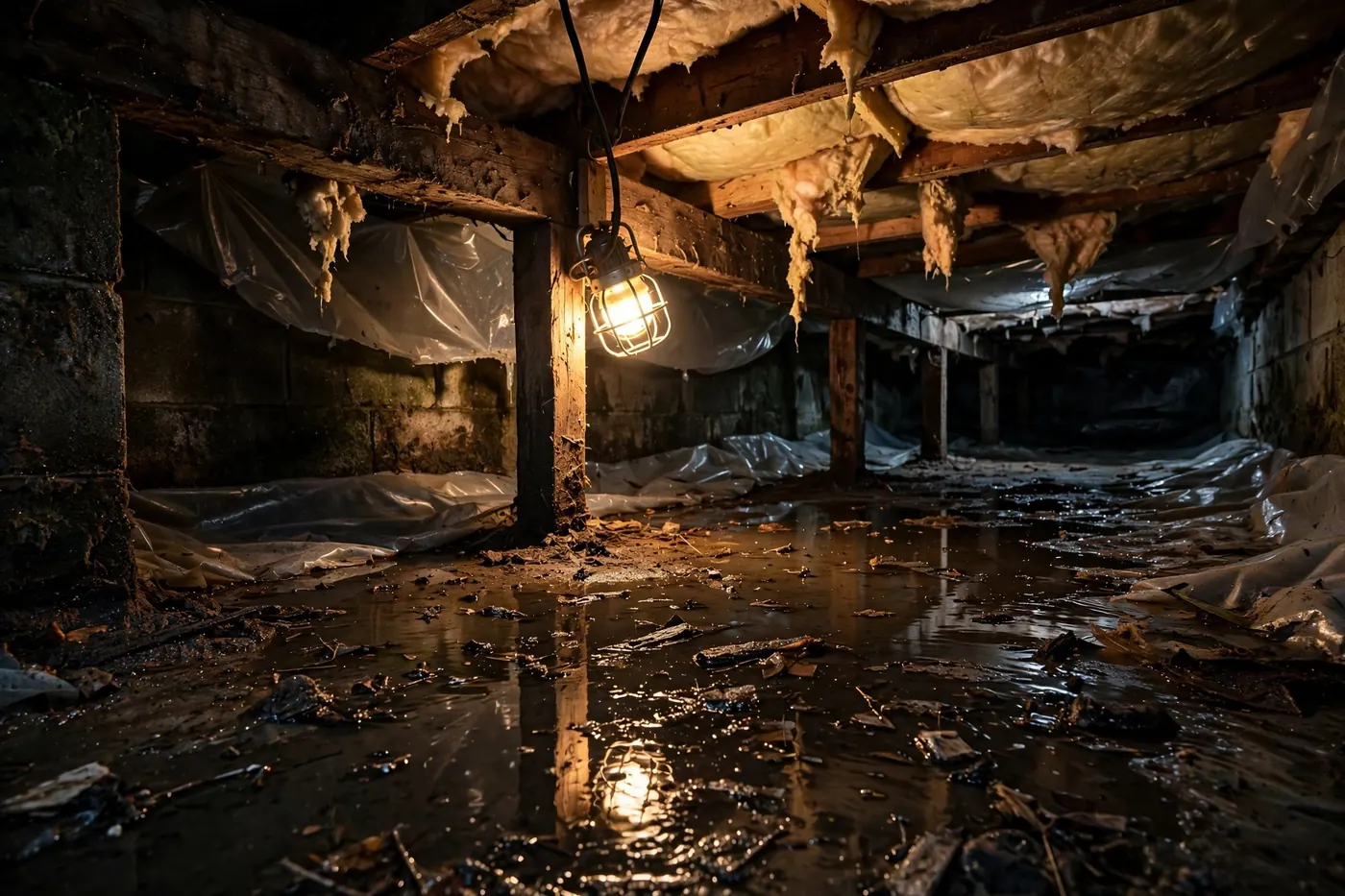
Standing water in a crawl space attacks the structure quietly. Floor joists and beams stay damp, and damp wood softens and rots over time, which is what leads to sagging or bouncy floors upstairs. Insulation between the joists absorbs water, sags, and stops insulating properly, which can show up as colder floors in winter and higher energy use.
Damp wood and damp insulation also feed mold growth on joists and subflooring, and the musty air from that growth drifts into the rooms above. Ductwork running through a wet crawl space can pick up moisture and odors and carry them through the house. None of this happens overnight, which is exactly why crawl space water damage is so often found late: by the time floors sag or smells reach upstairs, the water has been there a while.
How Crawl Space Drying and Cleanup Works
Cleanup starts with removing the water and whatever it ruined. Standing water is pumped out, and wet debris, fallen insulation, and damaged materials are removed so the space can actually dry. What stays behind, the joists, beams, and subfloor, is then dried with airflow and dehumidification, and moisture readings confirm when the wood is dry enough for repairs.
That measurement step matters. Joists that look dry on the surface can still hold moisture deep in the wood, and covering them up too early traps that moisture and restarts the problem. A proper job dries to verified readings, not to a visual guess, and only then moves on to repairs or protective measures. Our water damage inspection in Greenville can map moisture in a crawl space and show how far the problem has spread before any work starts.
Vapor Barriers and Drainage, in Plain Language
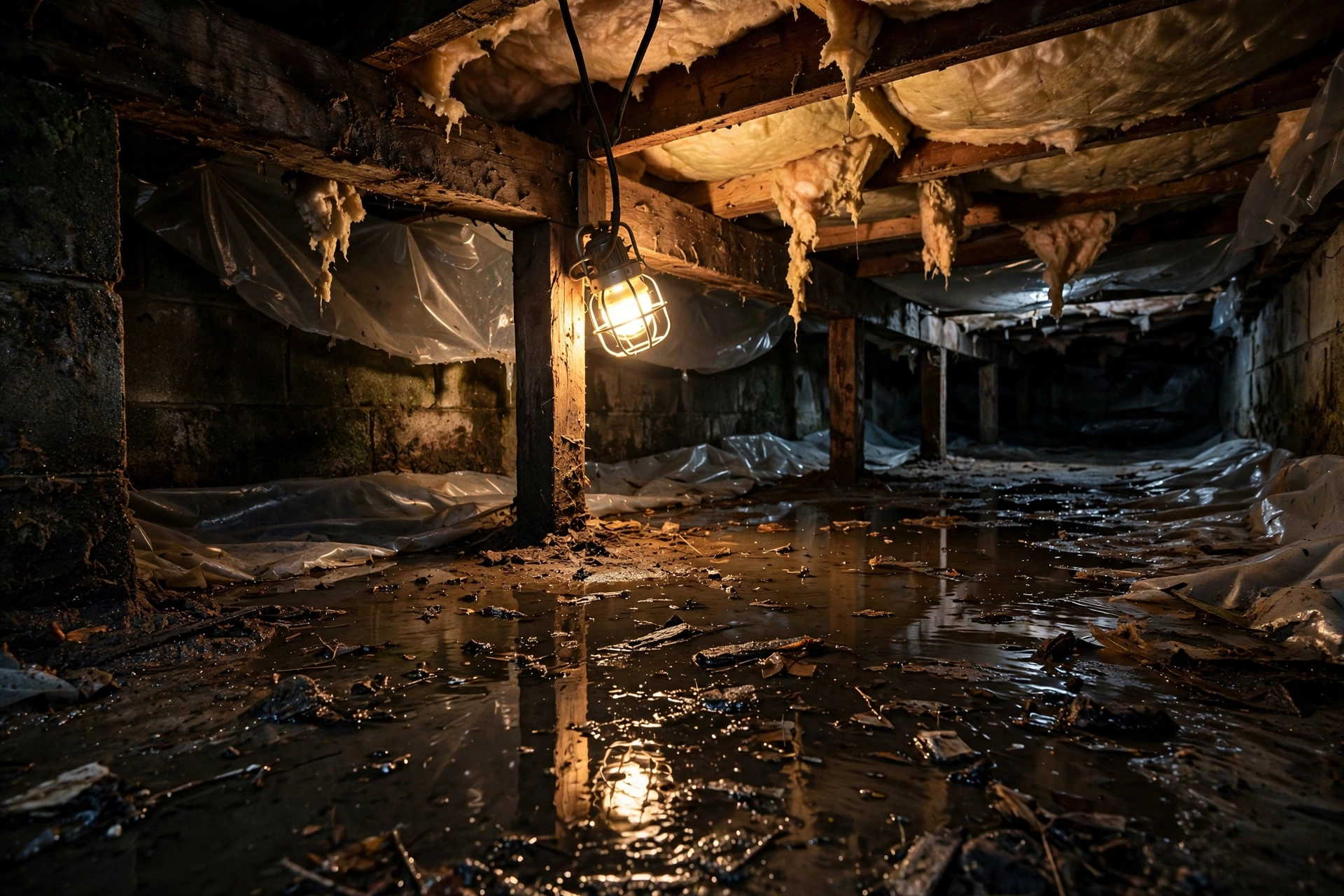
Two terms come up in almost every crawl space conversation, and both are simpler than they sound. A vapor barrier is a heavy plastic sheet laid over the ground in the crawl space. It does not stop liquid water from entering, but it slows ground moisture from rising into the space and into the wood above. Think of it as a ground cover that keeps everyday dampness down, not as a waterproof tank.
Drainage is the system that deals with actual water. In simple terms, it is a channel around the inside of the crawl space that collects water and guides it to a low point, where a sump pump pushes it out and away from the house. Drainage makes sense where water collects or runs in during rain. Neither measure fixes the causes outside the house, though: gutters, downspouts, and grading that send water toward the foundation should be corrected first, or any system under the house will be fighting a losing battle.
For homes where water collects below grade, our sump pump failure and basement flooding guide explains how pumps and drainage protect lower levels of a home. The EPA’s mold guidance is also a useful reference for why damp spaces under a home should not be left alone.
Keeping an Upstate Crawl Space Dry After Cleanup
Once a crawl space is dry, keeping it dry is mostly a routine. Keep gutters clear and downspouts pointed away from the house, and check that the ground still slopes away from the foundation after any landscaping work. Look in the access hatch after heavy rain, and pay attention to musty smells or soft spots in floors, since both are early warnings worth acting on the same week you notice them.
Seasonal checks help too: a quick look each spring and autumn, plus a check of any plumbing that runs through the space, catches most new leaks early. If water returns, or the space stays damp despite gutters and grading being correct, that is the point to get professional advice rather than guessing. If the problem has spread to living areas, our water damage restoration Greenville SC team can handle the full job, and our basement water damage service covers below-grade drying and repair for homes with lower levels.
Practical Guide: Crawl Space Water Damage: Signs, Causes & Cleanup
Crawl space water damage can come from plumbing leaks, rainwater drainage, groundwater intrusion or persistently humid conditions. The correct response depends on identifying the moisture source and checking whether insulation, wood framing or floors above have been affected.
Standing Water Versus High Humidity
Standing water may call for pumping or extraction after electrical and structural hazards are ruled out. Persistent humidity without visible puddles is a different problem that can involve ground moisture, ventilation, vapor barriers or air leakage. A reliable solution starts with distinguishing these causes rather than automatically installing the same drying equipment.
Inspecting the Subfloor and Framing
Wet joists, stained subflooring, deteriorated insulation and odors indoors can point to moisture beneath the home. A qualified professional can check the source and the condition of affected materials. Do not enter a confined crawl space with standing water, electrical hazards, suspected sewage, or signs of structural instability.
Preventing the Next Crawl Space Leak
Check that gutters drain away from the foundation and that downspouts discharge appropriately. Look for plumbing drips, grading problems and damaged vapor barriers. Drainage or encapsulation work may be separate from emergency water removal, so request a scope that identifies both immediate cleanup and long-term source correction.
For local assistance, see basement water damage and moisture inspection. Local Greenville Restoration connects callers with independent contractors; it does not perform restoration work. Confirm services, qualifications, pricing and scheduling with the individual provider.
Frequently Asked Questions
How do I know if my crawl space has water in it?
Look for musty smells in rooms above the crawl space, soft or bouncy floors, and doors that suddenly stick. A look through the access hatch after heavy rain will show standing water, mud, or soaked insulation directly.
Is a little dampness in a crawl space normal?
Some humidity is common in Upstate summers, but standing water, soaked insulation, or persistently damp joists are not normal and should be addressed before they rot wood or feed mold.
What is a crawl space vapor barrier?
A heavy plastic sheet laid over the ground in the crawl space. It slows ground moisture from rising into the wood above. It helps with everyday dampness but does not stop liquid water entering, which is what drainage handles.
Do I need a sump pump in my crawl space?
It depends on how water enters. Where water collects or runs in during rain, an interior drainage channel plus a sump pump moves it out reliably. Gutters, downspouts, and grading should be corrected first, since they decide how much water arrives.
Can crawl space water damage affect the rooms above?
Yes. Musty air rises from the crawl space into living areas, floors soften and sag as joists weaken, and mold on joists and subflooring affects the air inside the home. That is why a crawl space problem is a whole-house problem.
Suspect Water Under Your Upstate Home?
Do not wait for floors to sag. Independent restoration contractors pump out standing water, dry joists to verified readings, and explain in plain language what your crawl space needs to stay dry.