
Does Homeowners Insurance Cover Water Damage? A South Carolina Guide
“Will insurance cover this?” is the first question most homeowners ask us after the shock wears off — and the answer is the classic: it depends. South Carolina policies follow national patterns, but the details decide the outcome. Here’s the plain-English version, based on common insurance coverage distinctions and policy considerations.
For general restoration options, explore our Greenville water damage referral homepage and restoration process guide. Coverage and documentation requirements must be confirmed with your insurer and the independent contractor.

The golden rule: sudden vs. gradual
Almost every standard HO-3 homeowners policy in South Carolina covers water damage that is sudden and accidental — and excludes damage that is gradual or maintenance-related. That single distinction decides most claims:
- Covered: burst pipe, appliance supply-line failure, water heater rupture, washing machine overflow, storm-driven rain entering through wind-damaged roofing.
- Not covered: a leak you’ve known about for months, seepage through foundation cracks, groundwater rising into a basement, mold from long-term humidity.
The gray zone is where claims are won or lost: a pipe that “suddenly” burst may have been corroding for years. Documentation is everything — which is why professional moisture mapping and photos from day one matter so much.
South Carolina specifics worth knowing
Hurricane and storm deductibles: Many SC policies — especially in coastal counties, but increasingly inland — carry separate, higher hurricane deductibles (often 1–5% of dwelling coverage). For Upstate homeowners, standard deductibles usually apply to tropical-storm remnants, but check your declarations page.
Flood insurance is separate: Standard homeowners policies do not cover flooding — defined as water rising from outside (overflowing rivers, storm surge, surface water). That requires NFIP or private flood insurance. After the heavy rain events the Upstate has seen in recent years, this gap surprises homeowners regularly.
Sewer backup endorsement: Not in the base policy. If a sewer line backs up into your home — one of the nastiest and most expensive incidents — you’re paying out of pocket unless you added this inexpensive rider. For homes with older clay or cast-iron sewer lines (common in established Greenville neighborhoods), this endorsement is a no-brainer.
What’s typically covered
When a claim is approved, policies generally pay for: emergency mitigation (extraction, drying), removal of unsalvageable materials, repairs to the structure (drywall, flooring, paint), and often additional living expenses if you must relocate temporarily. Personal property coverage handles damaged belongings up to your limits. What’s commonly capped or excluded: the cost to fix the source itself (the policy pays for the damage the burst pipe caused, not the plumber’s pipe repair), and any pre-existing wear.
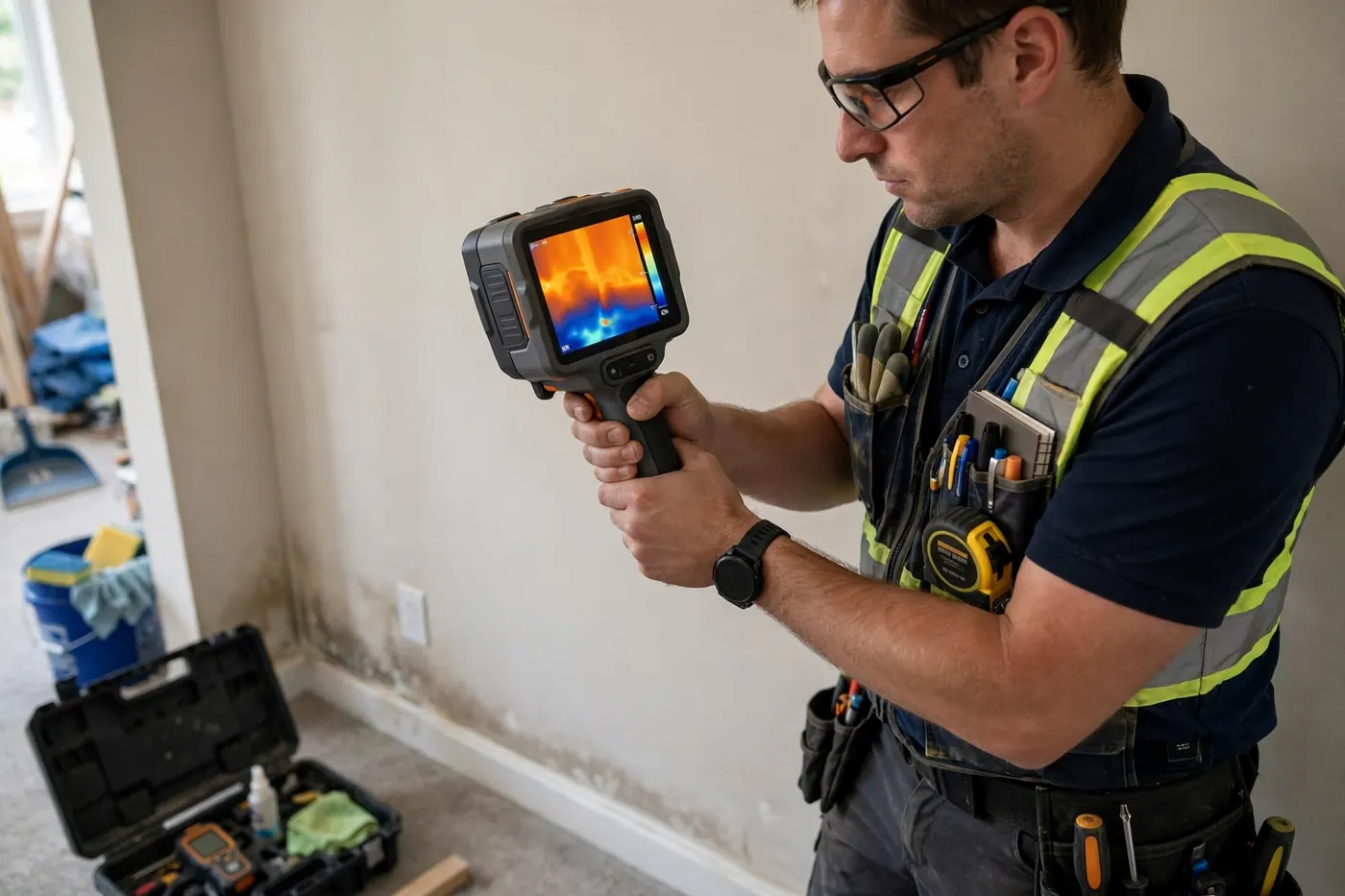
How to file a claim that actually gets paid
- Mitigate first, document always. Your policy requires you to prevent further damage — that’s why calling a restoration company immediately is both practical and contractual. Photograph everything before anything is moved.
- Call your insurer promptly — most policies require “prompt” notice. Days, not weeks.
- Keep every receipt — emergency services, hotel stays, meals if displaced. Additional living expenses add up.
- Don’t throw anything away until the adjuster has seen it. Ruined carpet and drywall are evidence.
- Get an independent scope. The adjuster’s estimate serves the insurer. A restoration company’s detailed scope — with moisture readings and photos — gives you something to compare against.
- Understand depreciation vs. replacement cost. Actual cash value (ACV) policies pay depreciated value; replacement cost value (RCV) pays the full repair cost (often in two checks: ACV upfront, the rest when work completes). Know which you have.
Common reasons claims get denied — and how to avoid them
The top denial reasons we see: delayed reporting (waiting weeks to file suggests the damage wasn’t urgent), lack of maintenance (a water heater from 1998 with no maintenance records), no documentation (no photos, no professional assessment — just your word), and pre-existing damage (the adjuster finds old stains under your new ones). Every one of these is preventable: report promptly, keep appliance ages and service records, photograph everything immediately, and get a professional moisture inspection on record from day one. A professional inspection report has salvaged many large claims.
How Contractors May Help With Documentation
Some independent contractors can provide photographs, moisture readings, estimates and invoices to support a claim discussion. Confirm what documentation the provider offers. Insurance coverage and claim decisions are made by the insurer, and this referral website does not coordinate adjuster negotiations or promise direct billing.
For flood-specific coverage (excluded from standard policies), FEMA’s National Flood Insurance Program is the primary resource.
Does Insurance Cover Water Damage From Burst Pipes?
Burst pipes are generally treated as sudden-and-accidental losses, which is the category most standard policies respond to. The claim usually turns on the details: a pipe that burst during a freeze is viewed differently from one that failed after months of visible corrosion nobody addressed.
Claims can fail when the home was left unheated during freezing weather or not properly winterized, because insurers may treat that as a maintenance gap rather than an accident. Documenting the burst, the temperature conditions, and your winterizing steps strengthens the file from day one.
Does Insurance Cover Water Damage From Appliance Failures?
Washing-machine and appliance overflows are generally sudden-and-accidental when they happen without warning. A supply hose that lets go at 2 a.m. is the classic covered example, and adjusters see it often.
The denial path here is maintenance: old hoses never replaced, or a known issue left unrepaired, can be treated as neglect rather than accident. Replacing rubber washer hoses with braided steel lines and keeping the old hoses as evidence of upkeep are small steps that matter at claim time.
Does Insurance Cover Roof Leaks After a Storm?
Roof leaks are usually covered when a storm peril — wind, hail, or a falling tree — damaged the roof first, and the water followed through that opening. The storm damage is the covered event; the interior water damage follows it.
Age, deterioration, or known roof issues are the usual denial path. A roof that was already failing before the storm, with no storm-created opening, rarely supports a water claim. Photos of the roof damage and the storm date make the causal chain clear.
Sump-Pump Overflow, Septic Overflow, and the Water-Backup Endorsement
Beyond sewer backup, sump-pump overflow and septic overflow sit in the same endorsement picture. Standard policies often exclude water that backs up through sewers or drains unless you carry a water-backup endorsement — an optional add-on with its own limit that you choose when you buy the policy.
If your basement flooded from a sump failure during a storm, the first question is whether that endorsement exists on your policy and what limit it carries. Check before the loss if you can; after the loss, the endorsement wording decides the claim, not the adjuster’s sympathy.
Mold After a Covered Water Event
Mold resulting directly from a covered water event and mitigated promptly is treated differently from mold caused by long-term leaks or ongoing humidity. The distinction is timing and response: fast drying and documentation after a covered loss versus months of unaddressed dampness.
This is general guidance only, and it is not a mold-removal service claim. Your policy’s mold wording — and whether the underlying water loss was covered — decides how any mold portion is handled.
FAQ: Will Filing a Claim Raise My Premium? Can Repeated Claims Lead to Non-Renewal?
As general guidance only: a single water claim does not automatically raise a premium, but claims history does factor into underwriting, and repeated water claims can affect renewal terms or pricing at renewal. Insurers weigh frequency as well as severity, which is why smaller losses are sometimes handled without a claim.
There is no universal rule here — carrier practices and state rules differ, and your own policy and claims history decide. Ask your agent how a claim would be viewed before filing, not after.
HO-3 vs HO-5: What Policy Type Means for Water Claims
Most South Carolina homeowners carry an HO-3 policy, which covers named perils for personal property and open perils for the dwelling itself. An HO-5 policy broadens that to open perils for contents as well, which can change how a water claim on belongings is evaluated.
The practical point is modest: know which form you hold before a loss, because it changes what you need to prove. Either way, the sudden-vs-gradual distinction and your policy’s water exclusions do most of the work in a water claim.
Scenario Guide: How Common Water Events Are Usually Treated
Every row below carries the caveat this post already uses: your own policy decides. These are usual general treatments, not guarantees.
| Event | Usual general treatment |
|---|---|
| Burst supply line | Usually sudden-and-accidental; winterizing and maintenance history matter. |
| Appliance failure | Usually sudden-and-accidental; old hoses or known issues can shift it to maintenance. |
| Roof leak after a storm | Usually covered when a storm peril damaged the roof first; age or deterioration is the denial path. |
| Rising floodwater | Generally not covered by standard homeowners policies; flood insurance is a separate policy. |
| Sewer backup | Usually requires a water-backup endorsement; without it, often excluded. |
Direct Billing for Water Damage: General Guidance
Direct billing means a restoration firm bills the insurer directly for covered work rather than billing you first. Whether that arrangement is available depends on the insurer, the claim, and the firm’s own process — it is never automatic, and no billing arrangement is promised here.
What we do in every case is document everything adjusters need: source, moisture readings, photos, and a written scope. That documentation is what makes any billing path — direct or reimbursed — work smoothly, and it is worth confirming the billing route with your adjuster before work begins.
Dealing with water damage and insurance?
Call to ask about independent restoration contractors and the documentation they may provide. This website does not manage claims or perform repairs.
Our Upstate SC water damage restoration services page covers the documentation adjusters need.
Additional Guidance: Does Homeowners Insurance Cover Water Damage in SC?
Sudden Leaks, Flooding and Sewer Backups Are Different
Many homeowners policies may cover resulting damage from a sudden accidental indoor plumbing discharge, subject to terms and exclusions. Flooding from rising water outside is usually handled through separate flood insurance. Sewer or sump backup may require an optional endorsement; never assume it is included.
What Documentation to Prepare
From a safe location, photograph the affected rooms and likely water source, keep receipts for reasonable loss-mitigation expenses and record dates. Notify your insurer promptly and ask what repairs can begin before an adjuster inspects the property. An independent contractor can explain what inspection notes or invoices they offer, but this website does not manage claims.
The Insurance Decision Is Not a Contractor Guarantee
Coverage can depend on sudden versus gradual damage, maintenance history, the cause of water intrusion, deductibles and policy-specific limits. An insurer decides coverage, not a restoration referral website. Request your policy wording and a written explanation if a claim is limited or denied.
For an assessment, see water damage inspection and the Greenville restoration referral homepage. Independent providers determine their own scope, availability and costs.