Flooded House Checklist: Exactly What to Do First
You’re standing in water and your mind is racing. Print this mentally now, because the order of operations in the first hour determines whether this is a bad week or a bad quarter. This is the exact checklist our Greenville crews wish every homeowner followed before we arrive.
Once the emergency is handled, here’s how long full restoration takes — and our 24/7 team is ready when you call.
The first 60 minutes
- Stay safe first. If water is near electrical outlets, the breaker panel, or appliances — do not wade in. Shut off power to affected areas from a dry location. If you can’t do it safely, wait outside and call 911 for electrical hazards.
- Stop the source — if it’s a burst pipe or appliance, shut the main water valve. If it’s storm flooding from outside, there’s no valve to shut; skip to step 3.
- Call for help now, not later. Call a flood damage restoration company immediately — while water is still rising, not after you’ve “assessed.” Also call your insurance company’s 24-hour line to open a claim number.
- Document everything. Phone photos and video of every affected room, water lines on walls, damaged belongings — before anything is moved. This is your claim evidence.
- Move valuables to high ground — documents, electronics, photo albums, medications. Work top-down: upstairs first if water is rising.
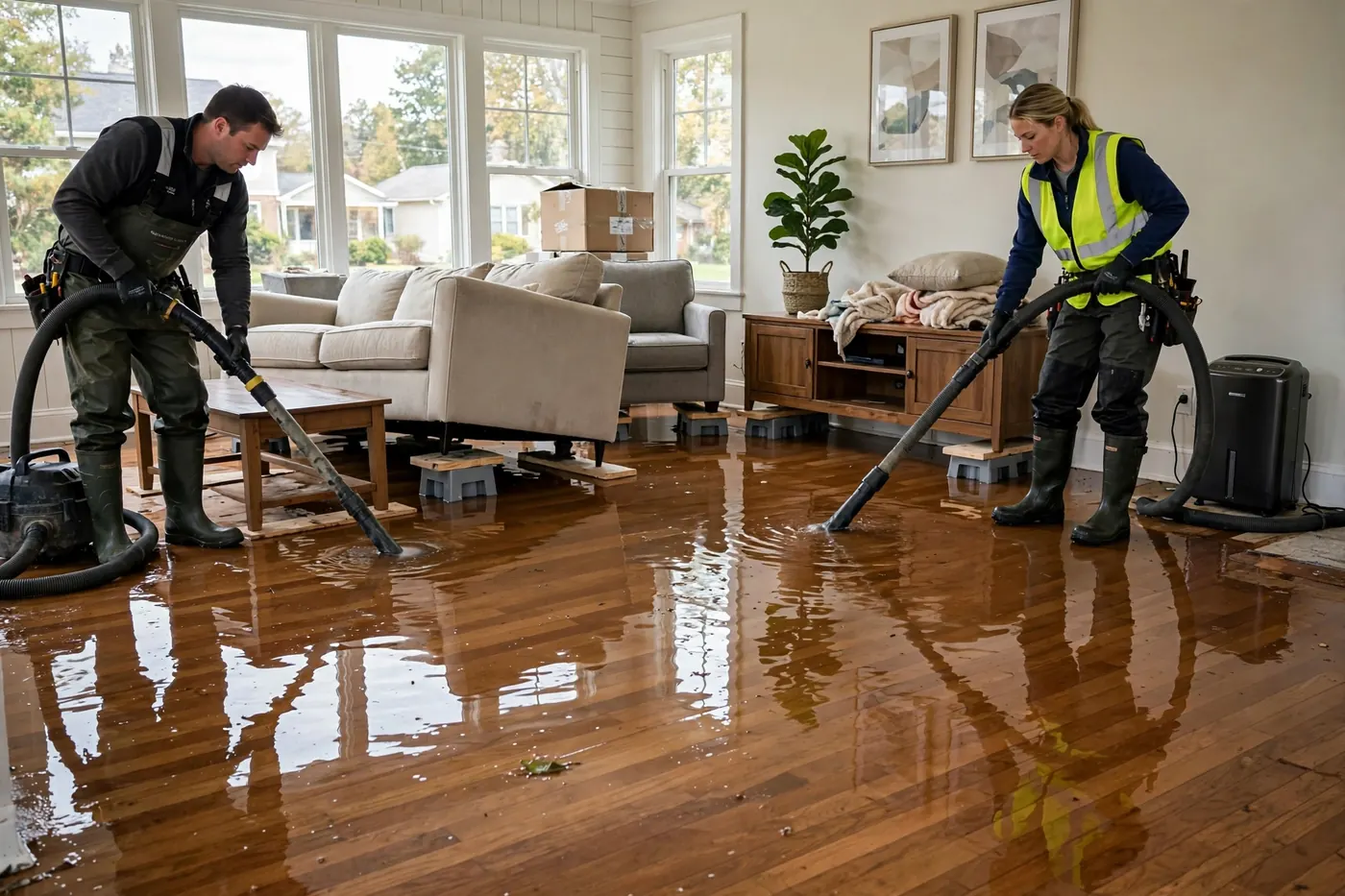
- Move furniture — get legs onto foil, wood blocks, or plastic to prevent staining and wicking. Even an inch of elevation helps.
The first 24 hours
- Don’t wait for it to “dry out on its own.” It won’t — not structurally. Standing water wicks into drywall at roughly an inch per hour initially.
- Remove wet rugs and textiles — they’re mold incubators and they trap moisture against flooring.
- Prop up cushions and hang fabrics for airflow if the crew hasn’t arrived yet.
- Don’t run the HVAC if floodwater reached the air handler or ductwork — you’ll aerosolize contaminants through the whole house.
- Separate wet from dry belongings to prevent cross-contamination and dye transfer.
- Start a loss inventory — room by room, item, approximate age and value. Your adjuster will ask.
What NOT to do (the expensive mistakes)
- Don’t use a household vacuum on standing water — electrocution risk, and you’ll destroy the vacuum.
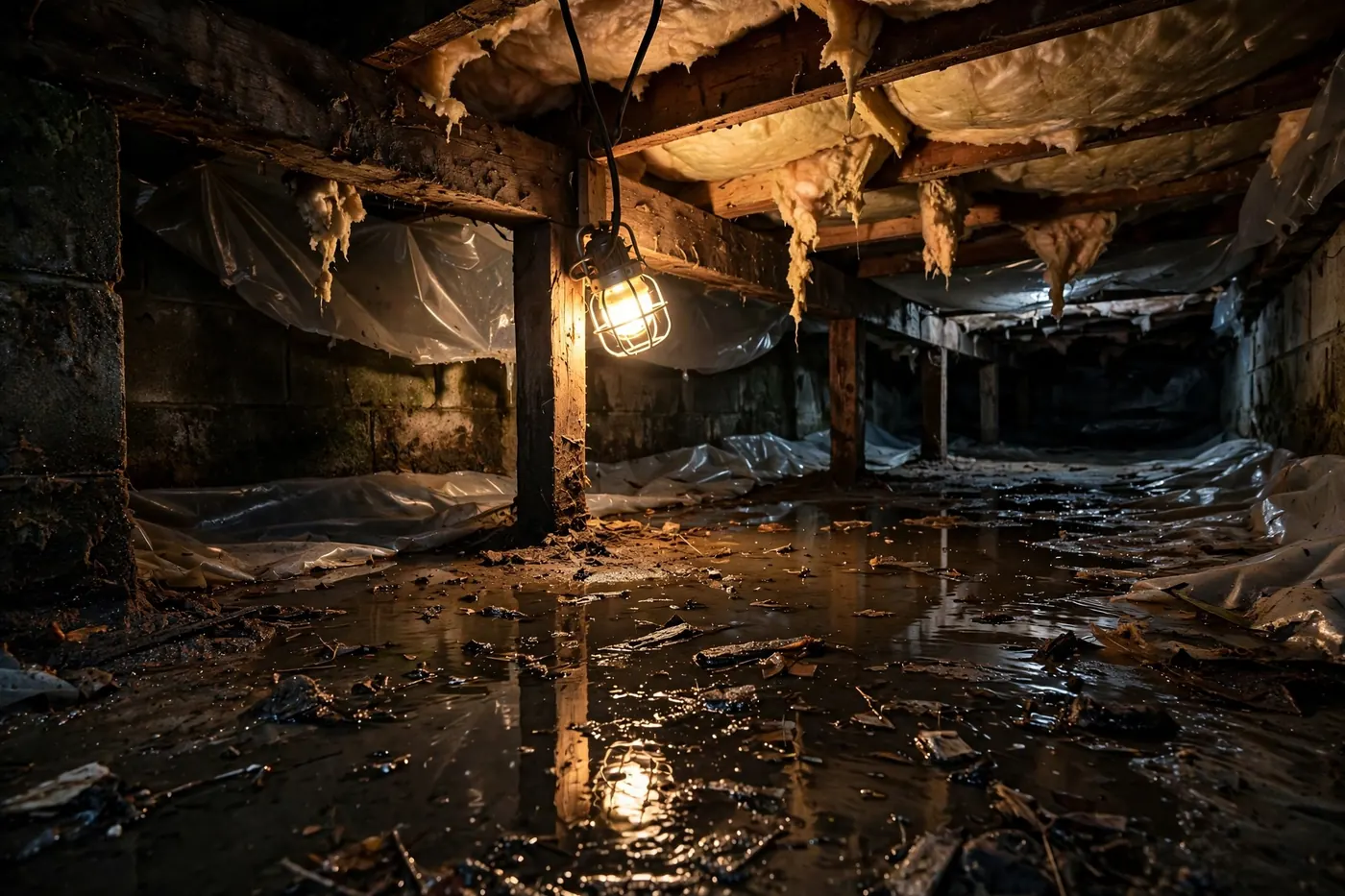
- Don’t enter water that may be contaminated. Floodwater and sewage backup carry bacteria, chemicals, and worse. If it’s not clearly clean supply-line water, treat it as hazardous.
- Don’t tear out walls or flooring yourself. You’ll spread contamination, void parts of your insurance coverage, and destroy the documentation your adjuster needs.
- Don’t turn the power back on in affected areas until a professional confirms it’s safe.
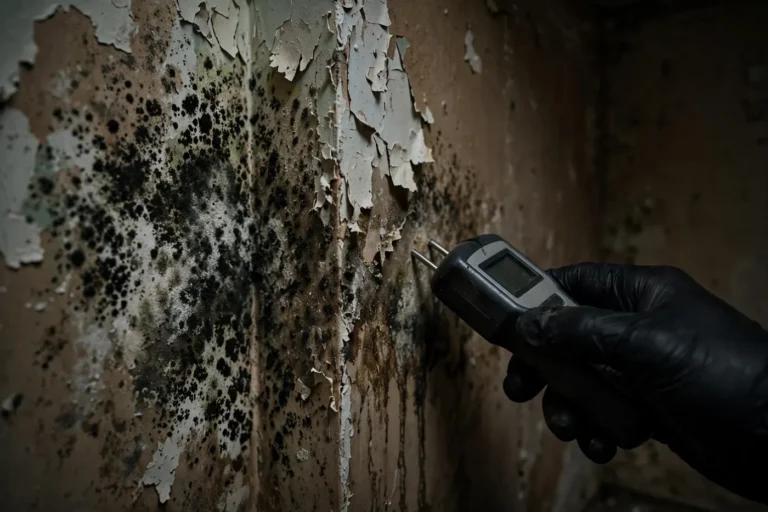
- Don’t delay the call. The single most expensive decision in every flood job we see is “let’s wait until morning.” Mold’s 48-hour clock doesn’t care about business hours — which is why 24/7 emergency response exists.
The first 48 hours: what the pros are doing
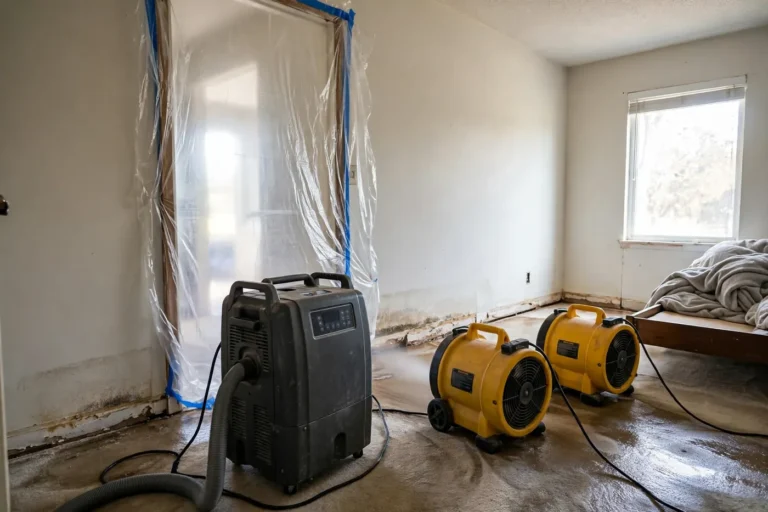
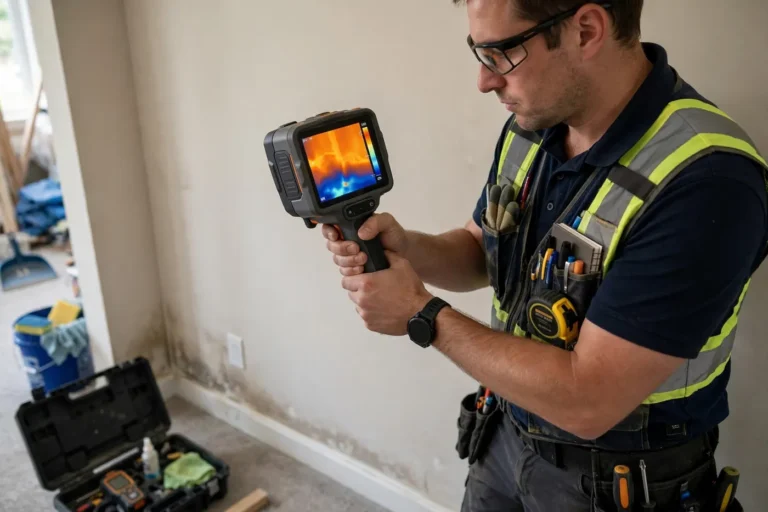
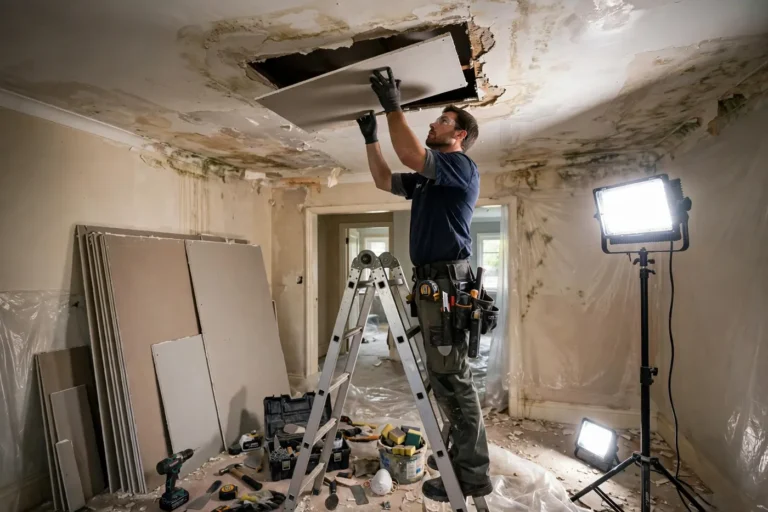
While you’re handling the checklist above, here’s what’s happening on our end — so you know what “fast response” actually looks like. Hours 0–4: extraction of all standing water, initial moisture mapping with thermal imaging, and placement of the first round of drying equipment. Hours 4–24: removal of unsalvageable materials (saturated carpet pad, swollen baseboards), full equipment deployment, antimicrobial application on affected surfaces. Hours 24–48: first moisture-reading check against drying goals, equipment repositioning, and a detailed scope for repairs shared with you and your adjuster. By the 48-hour mark, the emergency is over — the job shifts from crisis to controlled project. Every hour you waited before calling pushes this entire timeline back, which is why the checklist starts with “call now.”
Special case: flooding from outside (storms, rising water)
If water came from outside rather than your plumbing, add two steps. First, assume contamination — stormwater carries sewage, chemicals, and debris. Keep children and pets completely away, and don’t try to save porous belongings (mattresses, upholstered furniture, carpeting) that sat in it. Second, check your flood insurance status now — standard homeowners policies exclude rising water, and this determines your entire financial path. Document the high-water line on exterior and interior walls with photos; adjusters and flood policies specifically need this.
After the crew arrives
Once professionals are on site, your job shifts to coordinator: provide the claim number, point out all affected areas (including ones they should double-check — under stairs, closets, behind appliances), keep pets and kids clear of work zones, and keep your loss inventory going. We’ll handle extraction, drying, documentation, and adjuster coordination from there.
For official emergency guidance, Ready.gov’s flood page covers what to do before, during, and after flooding.
Flooding right now? Don’t wait.
Call now — crews dispatch 24/7 across Greenville, Spartanburg & Anderson. The first hour decides the final bill.