How Long Does Water Damage Restoration Take?
“How long will this take?” — after “how much will it cost,” it’s the question every homeowner asks. The honest answer: most residential water damage jobs in the Greenville area are fully complete within one to two weeks. But that range hides a lot of variation. Here’s the realistic phase-by-phase timeline, and what makes jobs run shorter or longer.
Dealing with flooding right now? Follow our flooded house checklist first — then read how our restoration team keeps timelines tight.
Phase 1: Emergency response & extraction (Day 1)
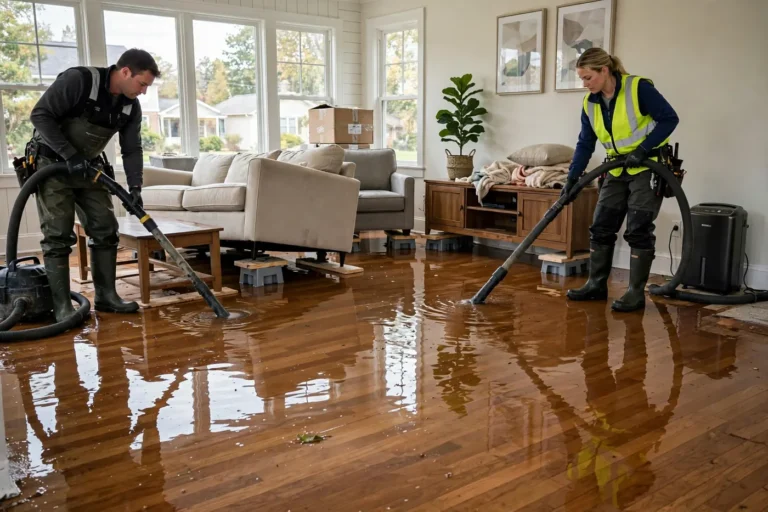
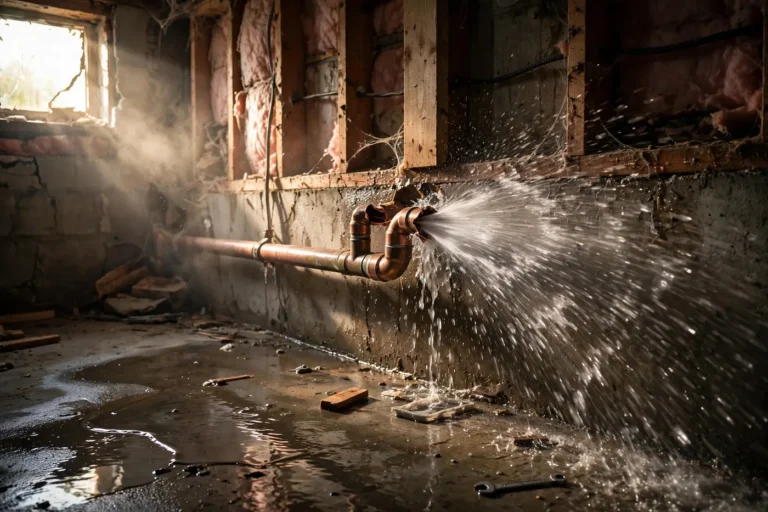
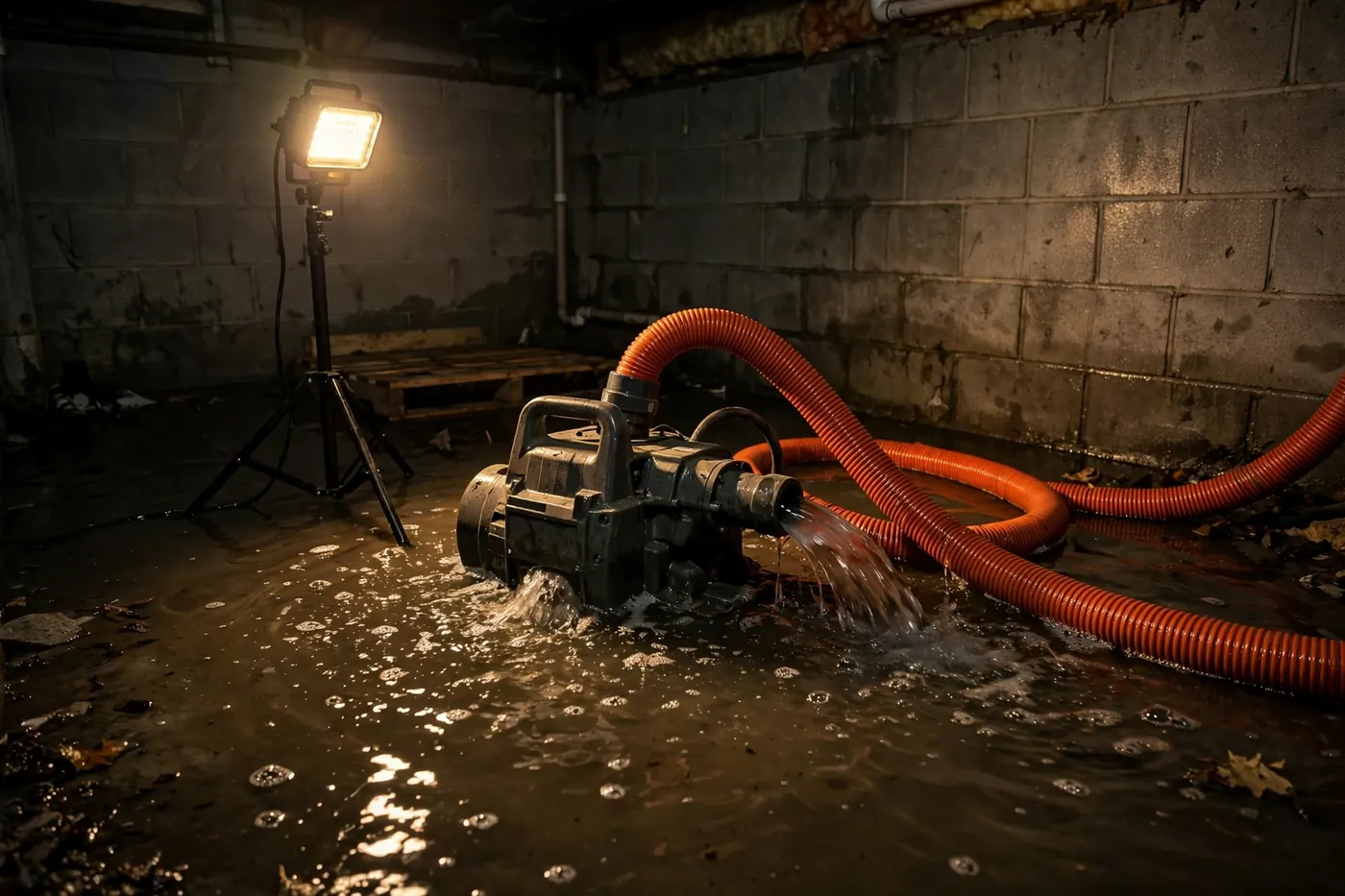
This is the fastest phase and the most urgent. Crew arrives (typically 60–90 minutes), stops the water source if still active, documents everything, and extracts standing water with truck-mounted or portable extractors. A single flooded room can be extracted in a few hours. By end of day one, the visible water is gone and drying equipment is running. If you need emergency water removal right now, this phase starts the moment we arrive.
Phase 2: Structural drying (Days 2–5, typically)
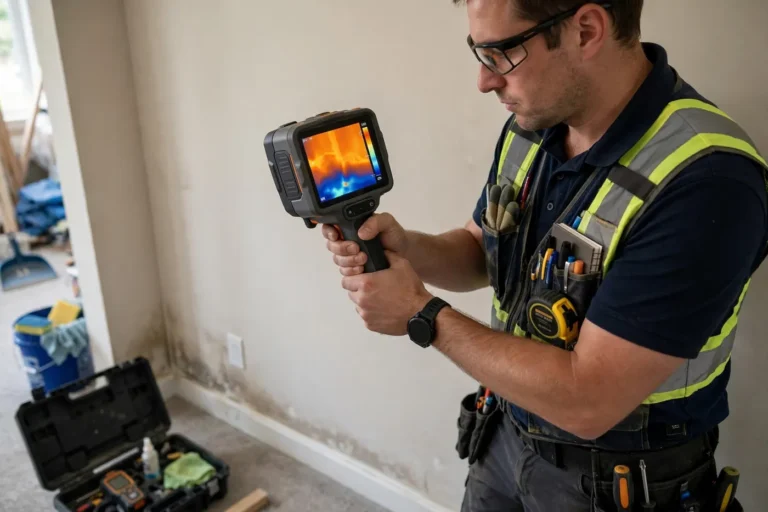
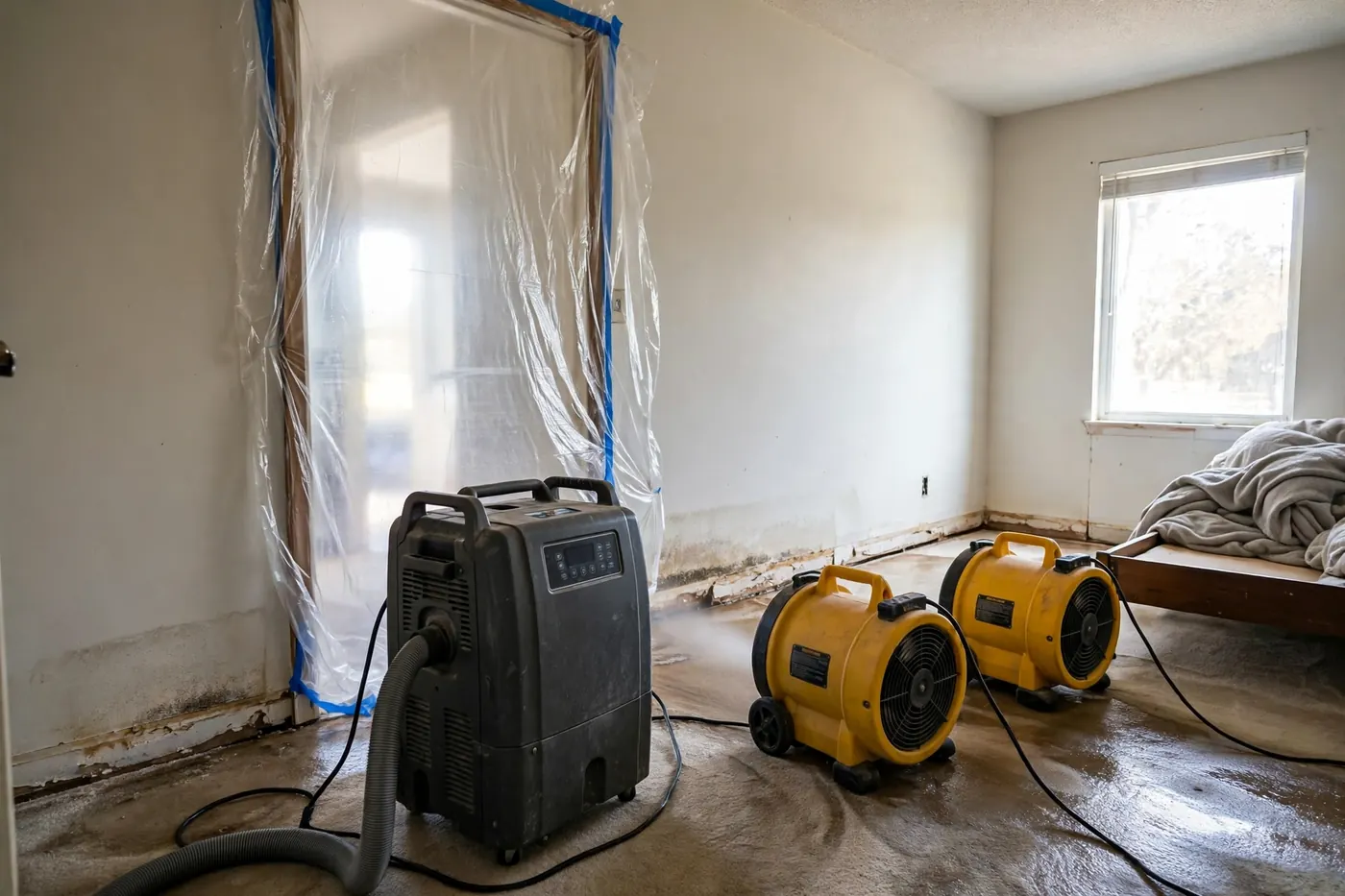
The longest hands-off phase. Commercial dehumidifiers and air movers run continuously — usually 3 to 5 days for a standard residential job — pulling moisture from wall cavities, subfloors, and framing. We visit daily to take moisture readings and reposition equipment. This phase can’t be rushed: declaring materials dry before meter readings confirm it is how mold problems start. Hardwood floors, plaster walls, and dense materials extend this phase; drywall and carpet shorten it.
Phase 3: Cleaning & antimicrobial treatment (Days 4–6)
Overlapping with the end of drying: HEPA vacuuming, wipe-downs, and EPA-registered antimicrobial application on affected structural surfaces. For contaminated water incidents (sewage, floodwater), this phase is more intensive — see our flood damage cleanup process — and adds a day or two.
Phase 4: Repairs & reconstruction (Days 6–14+)
The most variable phase. Replacing a section of drywall and repainting: a couple of days. New flooring throughout a main level, cabinet replacement, full bathroom rebuild: one to three weeks. This phase also depends on material availability and — frankly — your decisions on finishes. Many homeowners use the opportunity to upgrade flooring or paint colors, which is smart but adds time.
What makes jobs run longer
- Delayed start. Every day water sits, it wicks further into materials — a day-one call might mean 3 drying days; a week-late call can mean demolition plus 5.
- Contaminated water. Sewage and floodwater require more removal, more sanitizing, more verification.
- Hardwood and plaster. Beautiful materials that dry slowly and demand patience to save.
- Insurance negotiation. Waiting on adjuster approvals between phases stalls momentum — one reason thorough day-one documentation matters.
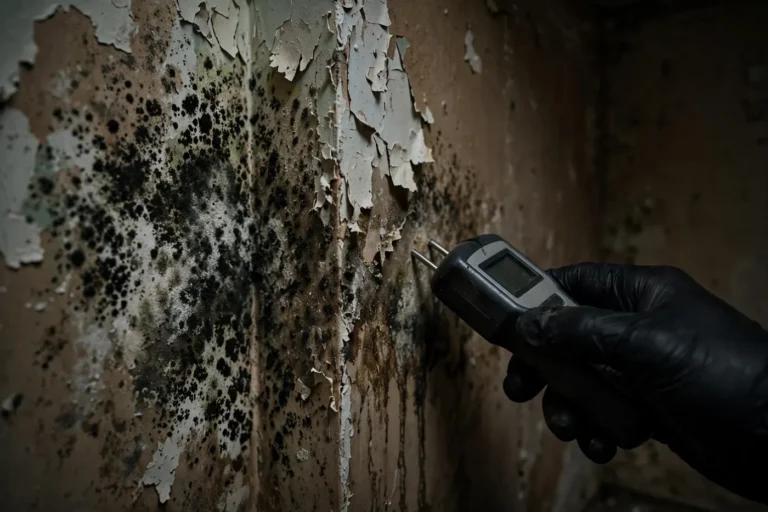
- Mold discovery. Finding established mold adds a contained remediation phase before reconstruction.
What speeds things up
Calling immediately. Choosing a company that does mitigation and reconstruction (no handoff delays between contractors). Making finish selections promptly. And having your insurance claim filed early with complete documentation — we handle the adjuster coordination as part of our restoration service so approvals don’t bottleneck the work.
Commercial jobs: a different timeline
Our commercial water damage work follows the same phases but with added complexity: larger square footage, after-hours scheduling to avoid business disruption, coordination with property managers and multiple stakeholders, and often stricter documentation for commercial policies. A 5,000 sq ft office with a sprinkler malfunction might take 2–3 weeks — not because drying is slower, but because phased work (keeping parts of the business operational) and commercial-grade reconstruction take longer. We plan commercial timelines around your operations, not the other way around.
The science of drying: why patience pays
Proper structural drying follows psychrometrics — the physics of air and moisture. Warm, dry air absorbs moisture from wet materials; dehumidifiers then remove that moisture from the air; the cycle repeats. Rushing it with excessive heat can actually damage materials (warping wood, cracking drywall compound) while leaving deep moisture behind. Our technicians calculate the specific humidity, set drying goals for each material type, and verify with daily readings. It feels slow on day three when fans are still running — but that discipline is exactly what prevents the mold remediation and reconstruction that shortcut jobs need six months later.
A realistic example
Typical Greenville scenario: washing machine supply line bursts on a Tuesday morning, flooding the laundry room and part of the kitchen. Crew extracts Tuesday afternoon. Drying runs Wednesday through Saturday with daily readings. Antimicrobial treatment Saturday. Drywall repair and paint the following Monday–Tuesday. New vinyl plank in the laundry Wednesday. Done in 8 days, start to finish — and that’s with no shortcuts on verification.
Drying times follow the IICRC S500 standard — the science of psychrometrics that determines when materials are truly dry.
Want your home back fast — done right?
We move fast on extraction and never rush the drying. Call now for 24/7 response across the Upstate.