Burst Pipes in Winter: How Greenville Homeowners Can Prevent Them
Greenville doesn’t get Minnesota winters — which is exactly why burst pipes hit Upstate homes so hard. A single overnight freeze in January can split a pipe in an uninsulated crawl space, and by morning hundreds of gallons have soaked through floors and drywall. Here’s how it happens, how to spot trouble early, and how to prevent it.
Already seeing signs of a hidden leak? Don’t wait for a burst — and if a pipe has already failed, our burst pipe repair team responds 24/7.
Why pipes burst (it’s not the ice itself)
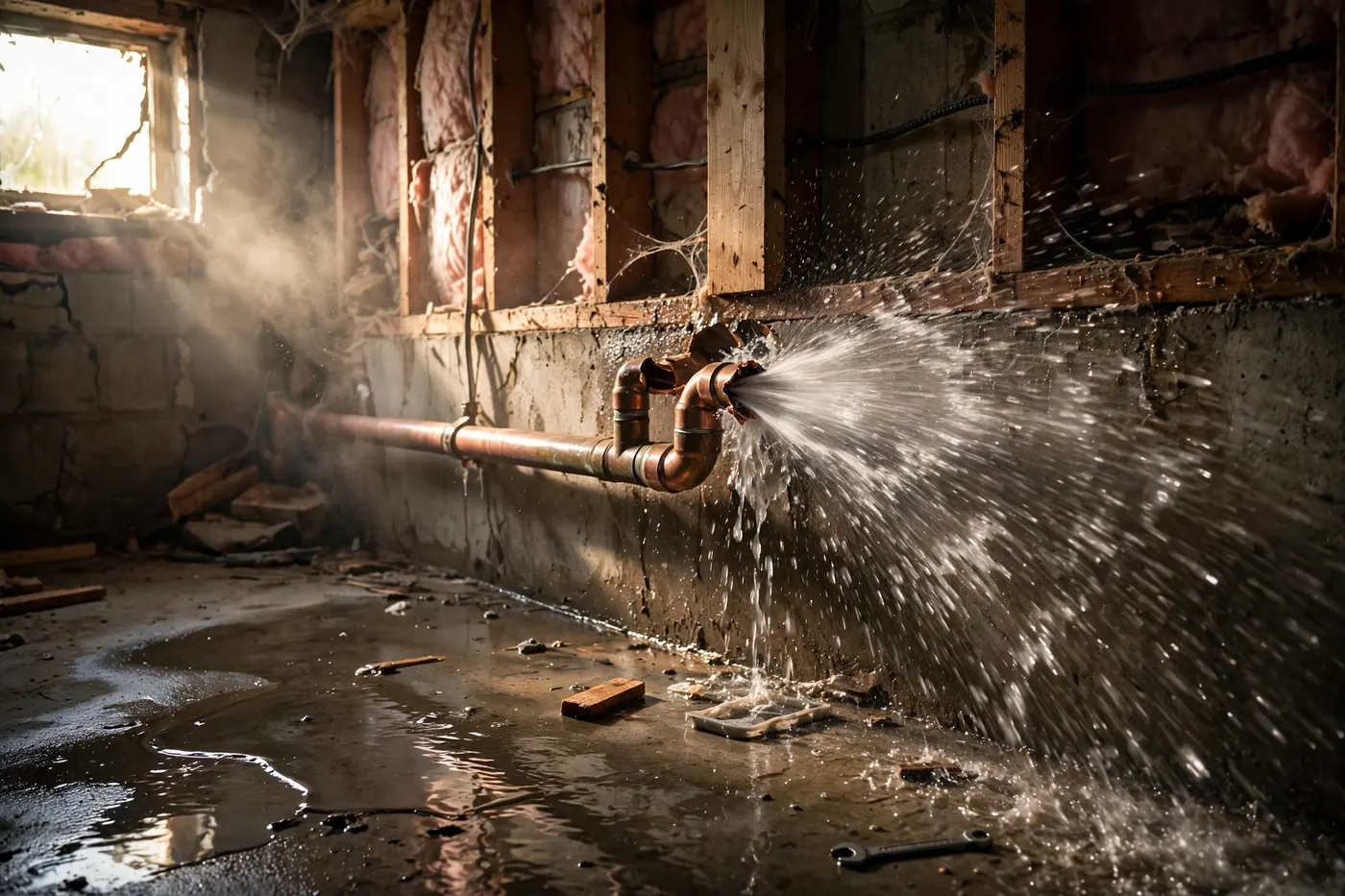
Most people picture ice expanding and cracking the pipe. That happens, but the more common mechanism is pressure: ice forms a blockage, water trapped between the blockage and a closed faucet has nowhere to go, and pressure spikes until the pipe splits — often at a joint or elbow, feet away from the actual ice. That’s why the break isn’t always where you’d expect, and why a pipe can burst even after it starts thawing.
Why Upstate SC homes are especially vulnerable
Three local factors work against us. First, many Greenville-area homes — especially older ones in neighborhoods like the North Main area and parts of Spartanburg — have plumbing running through vented crawl spaces and exterior walls with minimal insulation. Second, our freezes are intermittent: pipes go through repeated freeze-thaw cycles, which stress joints more than one sustained deep freeze. Third, complacency — homeowners who’ve never winterized because “it barely freezes here” are the ones calling us at 6 AM in January.
Warning signs your pipes are in trouble
Watch for these during cold snaps:
- Dropping water pressure at faucets — ice is narrowing the pipe.
- Strange sounds — banging, whistling, or gurgling when you run water.
- Frost on exposed pipes in crawl spaces, garages, or basements.
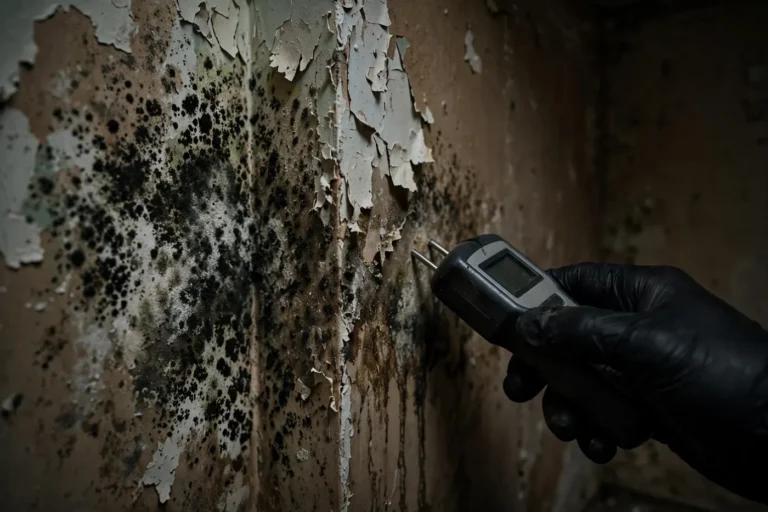
- Wet spots or musty smells appearing on walls or ceilings with no obvious source — a pipe may have already developed a slow split.
- Unexplained spike in your water bill — the classic sign of a hidden leak.
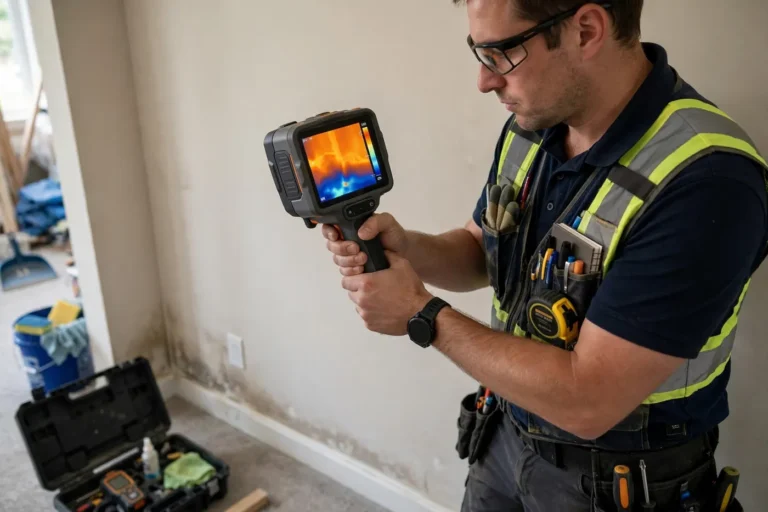
If you notice any of these, don’t wait for a full burst — schedule a moisture inspection before a small leak becomes a flooded kitchen.
The prevention checklist (do this before the first freeze)
- Insulate exposed pipes in crawl spaces, attics, garages, and exterior walls with foam sleeves — the single highest-ROI step.
- Seal air leaks where pipes enter the house; cold air pouring through a gap defeats insulation.
- Disconnect garden hoses and shut off exterior faucets from the inside valve, then drain the line.
- Keep the heat on — never below 55°F, even when traveling. The heating bill is nothing next to a burst-pipe restoration.
- Open cabinet doors under sinks on exterior walls during hard freezes so warm air reaches the pipes.
- Let faucets drip slightly during extreme cold — moving water is far harder to freeze.
- Know your main shutoff valve location and make sure it actually turns. Test it now, not at 2 AM with water pouring through the ceiling.
What to do if a pipe bursts
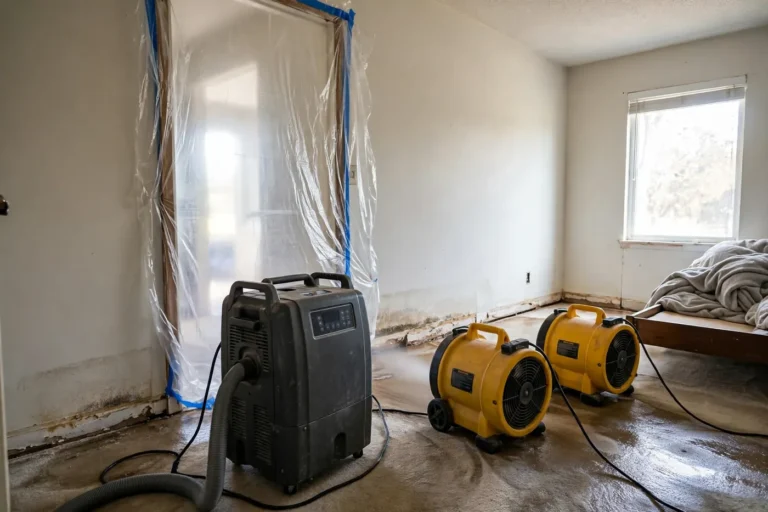
Shut off the main water valve immediately — this is the step that separates a $1,500 cleanup from a $15,000 restoration. Then kill power to affected areas if water is near outlets or the breaker panel, move valuables, and call for emergency burst pipe repair. Don’t wait until morning: every hour of standing water soaks deeper into subfloors and wall cavities.
Greenville’s freeze pattern: why timing matters
Unlike northern states where homeowners winterize once in October, Upstate freezes arrive in bursts — a 65°F Tuesday followed by a 22°F Thursday night. These swings are harder on plumbing than sustained cold: pipes expand and contract repeatedly, stressing joints and fittings with every cycle. The most dangerous nights are the first hard freeze of the season (usually December or January), when no one has prepared, and late-season freezes in March when people have already “un-winterized.” Set a phone reminder to check the forecast whenever nighttime lows approach freezing — your pipes don’t care what month it is.
Traveling this winter? Do this before you leave
Some of the worst burst-pipe jobs we see happen in empty houses. Before any winter trip: keep the thermostat at 60°F or higher (not 50 — the savings aren’t worth the risk), open cabinet doors under sinks, shut off the main water valve if you’ll be gone more than a few days and drain the lines by running faucets briefly, and have a neighbor or friend check in — a quick walkthrough catches what a smart thermostat can’t. Consider a $30 Wi-Fi water sensor under sinks and near the water heater; it texts you the moment it detects moisture.
The EPA’s mold guidance explains why pipes that leak slowly are often worse than pipes that burst — hidden moisture feeds mold for weeks unnoticed.
Pipe burst? Every minute counts.
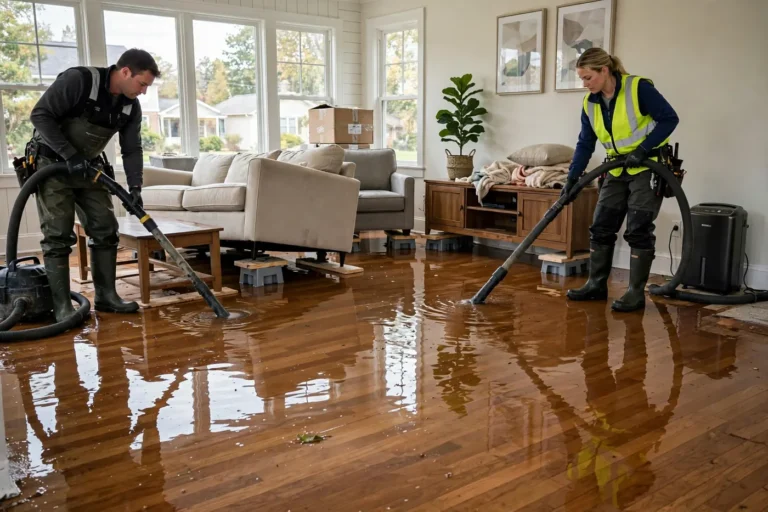
Our 24/7 crews extract water fast, dry the structure completely, and repair the damage — across Greenville, Spartanburg & Anderson.