
Flood Damage Cleanup in Greenville, SC
Storm flooding, flash floods, rising water — Greenville flood damage cleanup done right: extraction, sanitizing, structural drying, and full repair.
Flood Damage Cleanup in Greenville, SC — Done Right
Greenville flood damage cleanup is a different animal from a simple plumbing leak. When stormwater, rising creeks, or flash flooding push water into your home, you’re dealing with what the industry calls Category 3 — black water — carrying soil, bacteria, chemicals, and whatever else it picked up on the way in. It can’t just be dried. It has to be extracted, removed, sanitized, and then dried — in that order, with protective equipment and proper disposal.
Anyone who’s lived in the Upstate through a few summers knows the pattern: a stalled thunderstorm drops three inches in an hour, streets turn to rivers, and low-lying rooms, basements, and crawl spaces take on water. We’ve cleaned up after enough of these Greenville floods to know exactly where water goes in these homes — under the slab edge, through the crawl space vents, up through the floor drains when the storm system backs up.
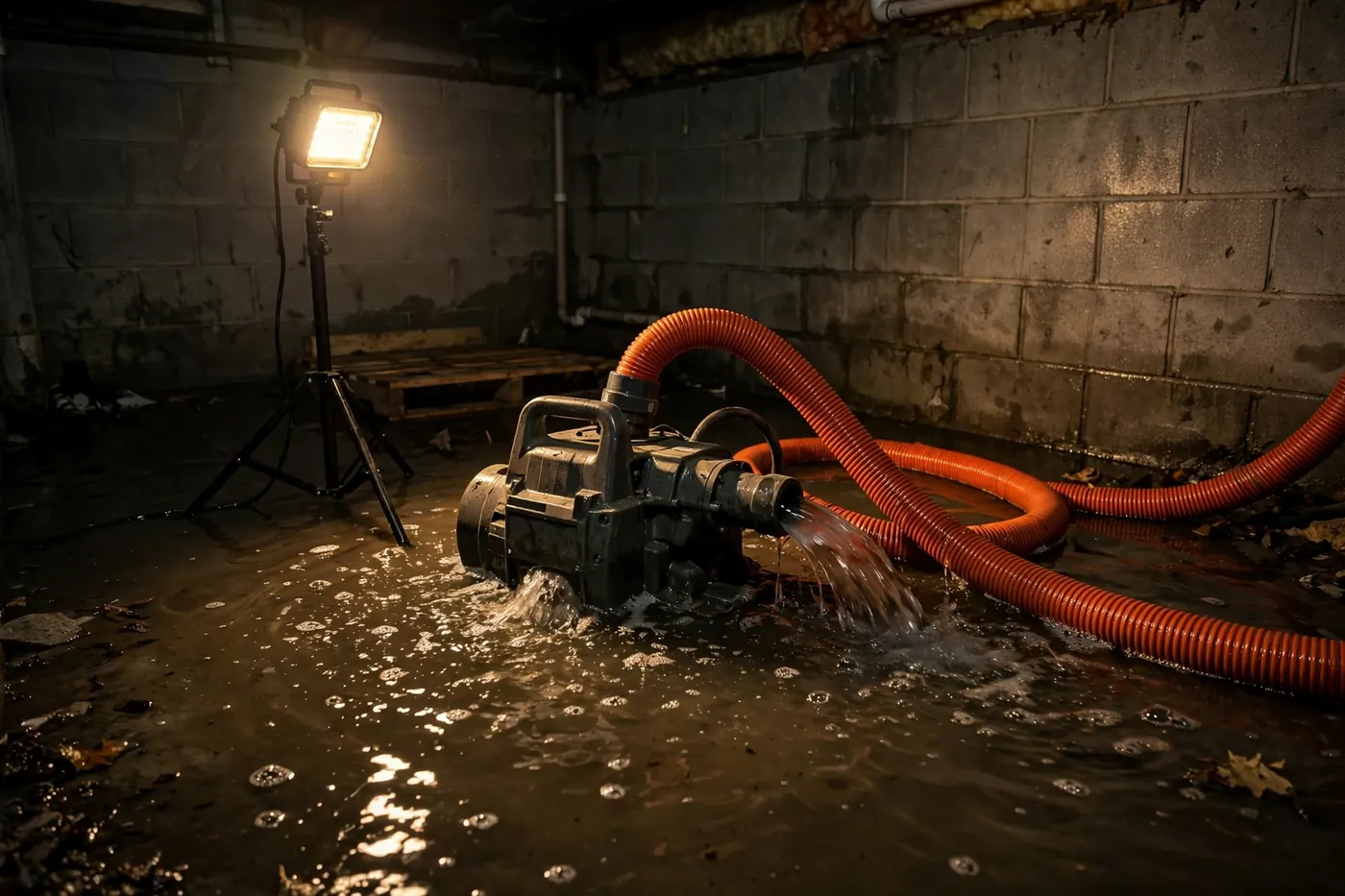
Our flood cleanup process follows the science, not shortcuts. We extract with truck-mounted equipment, remove unsalvageable porous materials (carpet pad, soaked drywall, wet insulation — they can’t be saved after black-water contact), apply EPA-registered antimicrobials, then dry the structure with commercial dehumidification until meters verify it’s dry. Then we rebuild. One Greenville crew, accountable for all of it.
Storm flooding often brings contaminated water — if sewage is involved, our sewage backup cleanup protocol applies. Either way, the job finishes with our full restoration process: verified drying, sanitizing, and complete repairs.
After a Flood: What Needs Professional Cleanup
If it came from outside, it’s contaminated — period. Floodwater carries bacteria, fuel residues, and sewage cross-contamination. This is never a DIY mop-up.
Pad acts like a sponge for contaminants and can’t be sanitized. Drywall wicks floodwater upward — we cut it at the flood line so drying actually works.
The high-water mark shows exactly how far contamination reached. Everything below that line needs removal or professional sanitizing.
Laminate and engineered wood delaminate fast after flood exposure. The sooner we get drying equipment on it, the more we can sometimes save.
Flood moisture hides in wall cavities, under flooring, and in crawl spaces. If you can smell it, it’s growing somewhere you can’t see.
What’s Included in Flood Damage Cleanup
- 24/7 emergency dispatch anywhere in Greenville, Spartanburg & Anderson
- Truck-mounted extraction of all standing floodwater
- Removal and disposal of contaminated porous materials (pad, drywall, insulation)
- EPA-registered antimicrobial application on all affected surfaces
- Commercial structural drying with dehumidifiers and air movers
- Crawl space and subfloor drying — where flood moisture loves to hide
- Daily moisture verification until the structure tests dry
- Full rebuild: drywall, flooring, trim, and paint
- Insurance-ready photo and moisture documentation
Cost of Flood Damage Cleanup
What Affects the Cost?
Flood damage cleanup in Greenville, SC usually runs $3,000–$8,000 for a contained single-level event and climbs past $10,000 when multiple rooms need material removal and reconstruction. Black-water protocols and disposal add real cost — any quote that seems too cheap is skipping steps.
- Depth and spread — a few inches in one room vs. feet across the whole first floor
- Contamination level — Category 3 floodwater requires protective gear, sanitizing, and disposal protocols
- Material removal — how much drywall, flooring, and insulation must be torn out and replaced
- Crawl space involvement — flooded crawl spaces need dedicated drying and often vapor barrier work
- How fast we start — every day of delay grows the demolition scope
How We Clean Up Flood Damage
Extract & Remove
All standing water pumped out; contaminated carpet pad, drywall below the flood line, and wet insulation removed and disposed of properly.
Sanitize
Antimicrobial treatment on every affected surface — framing, subfloor, concrete. Floodwater contamination doesn’t rinse off; it gets treated.
Dry Deep
Commercial dehumidifiers and air movers run for days. We check wall cavities, crawl spaces, and under flooring with meters — daily.
Rebuild
New drywall, flooring, trim, and paint. Your home back to pre-flood condition, verified dry before anything gets closed up.
Insurance Claims, Simplified
Here’s the honest truth most homeowners learn the hard way: standard homeowners insurance typically does NOT cover rising floodwater — that needs separate flood insurance (NFIP). But storm-driven water that enters through wind-damaged roofing or windows often IS covered. We document the water’s entry path carefully, because that distinction decides the claim. If you have flood insurance, we work those claims regularly.
If your flooding came from rising water (storms, overflowing waterways), review FEMA’s flood insurance information — standard homeowners policies exclude flood damage.
How to Prevent It Next Time
- Keep gutters clean and downspouts extended 6+ feet from the foundation
- Regrade soil so it slopes away from the house — the cheapest flood insurance there is
- Install a battery-backup sump pump if you have a basement or low crawl space
- Know whether you’re in a flood zone — and what your policy actually covers before the storm
FAQs About Flood Damage Cleanup
Is floodwater really that dangerous to clean up myself?
Yes. What looks like rainwater has picked up sewage, chemicals, and bacteria on its way in. Professional flood cleanup uses protective equipment, proper extraction, and antimicrobial treatment — a shop vac and bleach don’t cut it.
Why do you have to cut out my drywall?
Floodwater wicks up drywall like a paper towel, carrying contamination with it. Cutting at the flood line (usually 12–24 inches up) lets us sanitize the framing and dry the cavity — patching over it traps contamination inside your walls.
How long before my home is livable again?
Extraction and sanitizing happen day one. Drying takes 3–5 days typically. Full rebuild adds 1–3 weeks depending on scope. We’ll give you a straight timeline after inspection — not a guess over the phone.
Does homeowners insurance cover flood damage in Greenville?
Usually not for rising water — that requires separate flood insurance. But water entering through storm-damaged roofs or windows is often covered under homeowners. We document the entry path precisely because it determines coverage.
Can my hardwood floors be saved after a flood?
Sometimes, if we get to them fast with proper drying mats and dehumidification. But floodwater contamination complicates it — we’ll give you an honest assessment, not a sales pitch, after metering the floors.
What about my crawl space?
Flooded crawl spaces are extremely common in the Upstate and extremely neglected. We pump them, dry them, treat them, and tell you straight what drainage or vapor barrier work will prevent the next one.
Do you work with flood insurance (NFIP) claims?
Yes — we document to the standards flood adjusters expect: water lines, moisture readings, material lists, and photos of everything.
Proudly Serving the Upstate
Greenville Spartanburg Anderson Greer Mauldin Simpsonville Fountain Inn Easley Travelers Rest Pickens
Covering 20+ ZIP codes across Greenville, Spartanburg & Anderson counties.
Flooded? Call now — contamination doesn’t wait.
Every hour of standing water means more damage — and more cost. Call now and we dispatch immediately.